Kitchen know-how
Cutting onions evenly without complicated tricks
A stable cut surface and suitable piece sizes make everyday preparation easier.
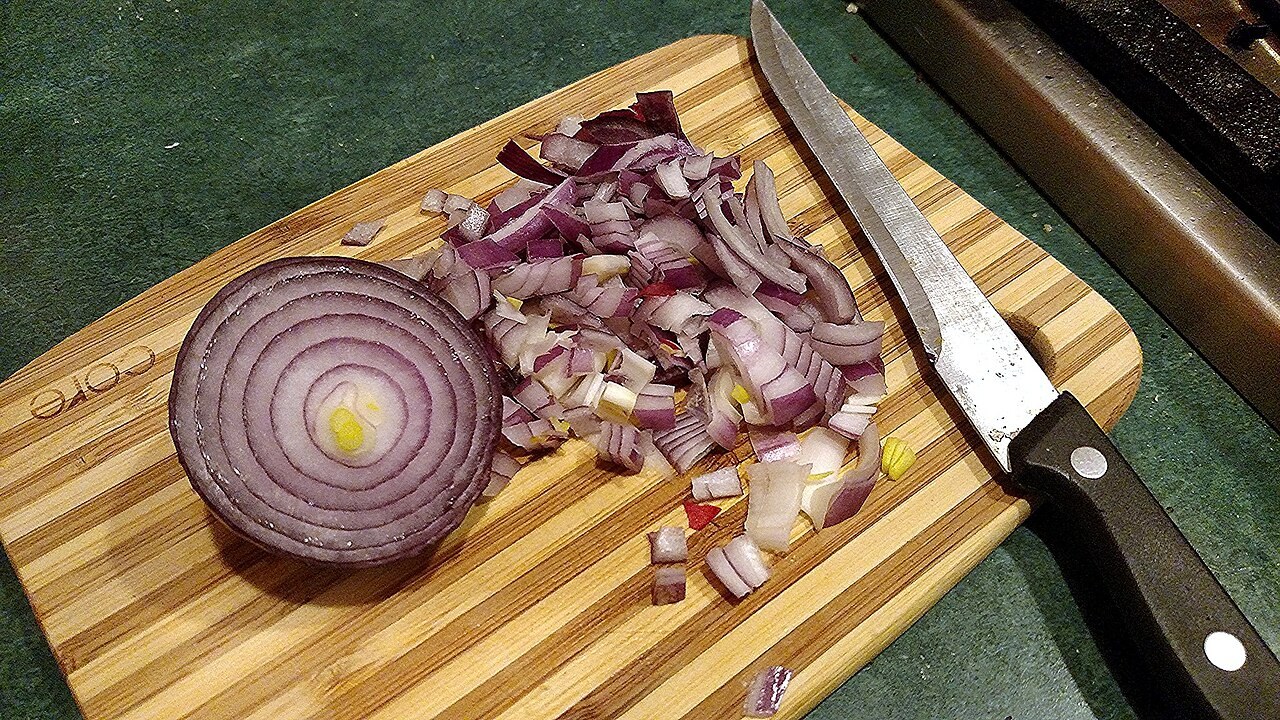
Onions for a sauce often need small dice, while an oven dish may need wedges. Even cutting does not mean millimetre precision: the pieces should soften at roughly the same rate. A stable surface and calm working method help more than rapid movements. Choose a knife you can control comfortably and clear your working area before starting.
Stabilise the chopping board
Put the board on a non-slip surface or a slightly damp cloth if it otherwise moves. Keep a bowl beside it for skins and trimmings. An overcrowded worktop makes controlled movements harder. Use a clean knife suited to vegetables. A very blunt blade requires unnecessary pressure and may slip more readily on a rounded onion.
Create a flat resting surface
Cut the onion lengthways through the root into halves and remove the dry outer skin. Place one half cut-side down on the board so it is less likely to roll. The root can initially hold the layers together. Remove that last piece at the end rather than separating the entire half into loose layers at the start.
Make lengthwise cuts for dice
Cut narrow strips through the resting half towards the root without cutting all the way through the root end. Curl the fingertips of your guiding hand away from the edge. Work slowly and adjust spacing to the dice size you want. Extra horizontal cuts directed towards the holding hand are not necessary for useful everyday diced onion.
Cut across the prepared strips
Turn the onion into a position you can control if necessary, then cut across the strips. Its natural layers form small pieces. When the remaining section becomes awkwardly small, lay it flat and chop carefully or reserve it for another use. Speed is not a measure of quality here; controlled, reasonably even cuts matter more.
Choose wedges or half-rings deliberately
For roasted vegetables, cut each half lengthways into wedges. For half-rings, cut crossways into similar slices. Whole rings require a different resting position and are not essential for many everyday dishes. Match thickness to cooking time. Thin pieces colour more quickly; thick wedges need longer for the inner layers to soften.
Use the size during cooking
Small dice distribute well through sauces and soups. Add them to suitable fat and stir over moderate heat when you want them softened and translucent. Substantial browning needs a different method and more time. Avoid combining very finely cut pieces with large chunks if you want an even result rather than burnt edges alongside firm centres.
Kitchen questions
One more question?
Must the dice look perfect?
No. Roughly similar sizes are sufficient for everyday cooking. Controlled handling and the texture you want in the dish matter more than immaculate shapes.
How do I stop the onion rolling?
A halved onion resting cut-side down is much more stable than a whole rounded onion.
Can I use a food processor?
Yes, if chopped rather than clearly diced onion suits the dish. Use short pulses; prolonged processing can create a very fine, wet mixture.

.jpg)
