Kitchen know-how
Changing cake tin size: diameter, area and batter depth
Adapt a simple cake to another round tin without scaling the baking time blindly.
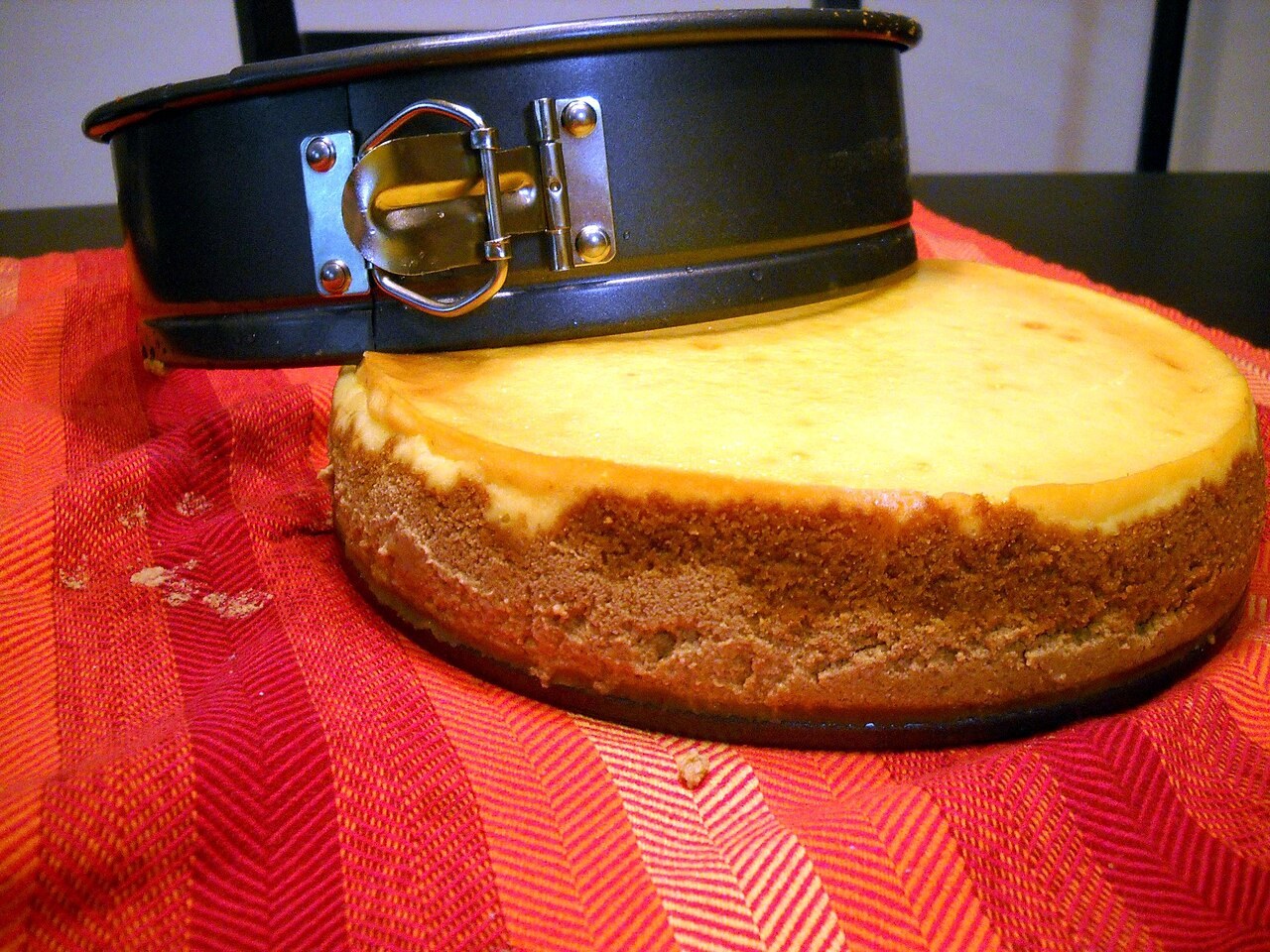
You have a 20cm springform tin but the recipe calls for 26cm. Comparing the diameters alone is not enough. The base area matters when you want to keep roughly the same batter depth. This calculation helps with simple creamed cakes and shallow cakes. Elaborate layer cakes, ring moulds and recipes with substantial oven rise need additional judgement.
Measure the internal diameter
Measure inside the base of the tin rather than across its outer rim. Manufacturer measurements can vary slightly. A round springform tin and a round, sloping-sided dish do not necessarily have the same usable base area despite matching widths at the top. Before calculating, decide whether you want the same sort of cake at approximately the same height.
Calculate an area factor
For two round tins, divide the new diameter squared by the original diameter squared. Moving from 26cm to 20cm gives 400 divided by 676, approximately 0.59. Multiply every ingredient weight by that factor. For 250g flour, this means about 148g. Rounding to sensible gram amounts is practical for ordinary home baking.
Divide eggs and small quantities carefully
Three eggs are not convenient to multiply by 0.59. Crack them into a bowl, beat the yolks and whites together and weigh the mixture without the shells. Use the calculated proportion of that weight. Weigh small amounts of baking powder or salt where possible too. Changing only flour and sugar disrupts the original balance of the batter.
Allow for depth and tin material
Putting all the original batter in a smaller tin makes a taller cake and can cause overflow. Preserve the intended filling depth; many creamed batters need substantial room above the surface. Dark metal, pale metal and glass transfer heat differently. An area calculation does not account for these material changes, so checking doneness is still essential.
Judge the baking time again
With similar batter depth, the baking time may be similar but is not automatically identical. Start checking a little before the original minimum time. Look at the edges, surface and centre. A smaller cake with a different depth may behave differently. Never multiply the baking time by the ingredient scaling factor as if the two were equivalent.
Recognise the limits
A rectangular loaf tin can be compared approximately using its usable length and width. A ring mould also has a central opening and different heat paths. For cheesecake, Swiss rolls or very deep cakes, a recipe designed for your tin is usually a better choice. Record the factor, actual batter depth and time for a more predictable second attempt.
Kitchen questions
One more question?
Can I reduce a 26cm cake to 24cm?
The factor is 24² divided by 26², approximately 0.85. Adjust all the ingredients together and check the cake using its cooking cues.
What should I do with extra batter?
Put suitable batter in extra small tins and bake separately, checking earlier. Avoid overfilling the main tin for convenience.
Does the calculation work for bread?
Only partly. Tin height, dough weight, proofing and crust formation matter more in bread. Use suitable bread-tin guidance.

.jpg)
