Bread & rolls
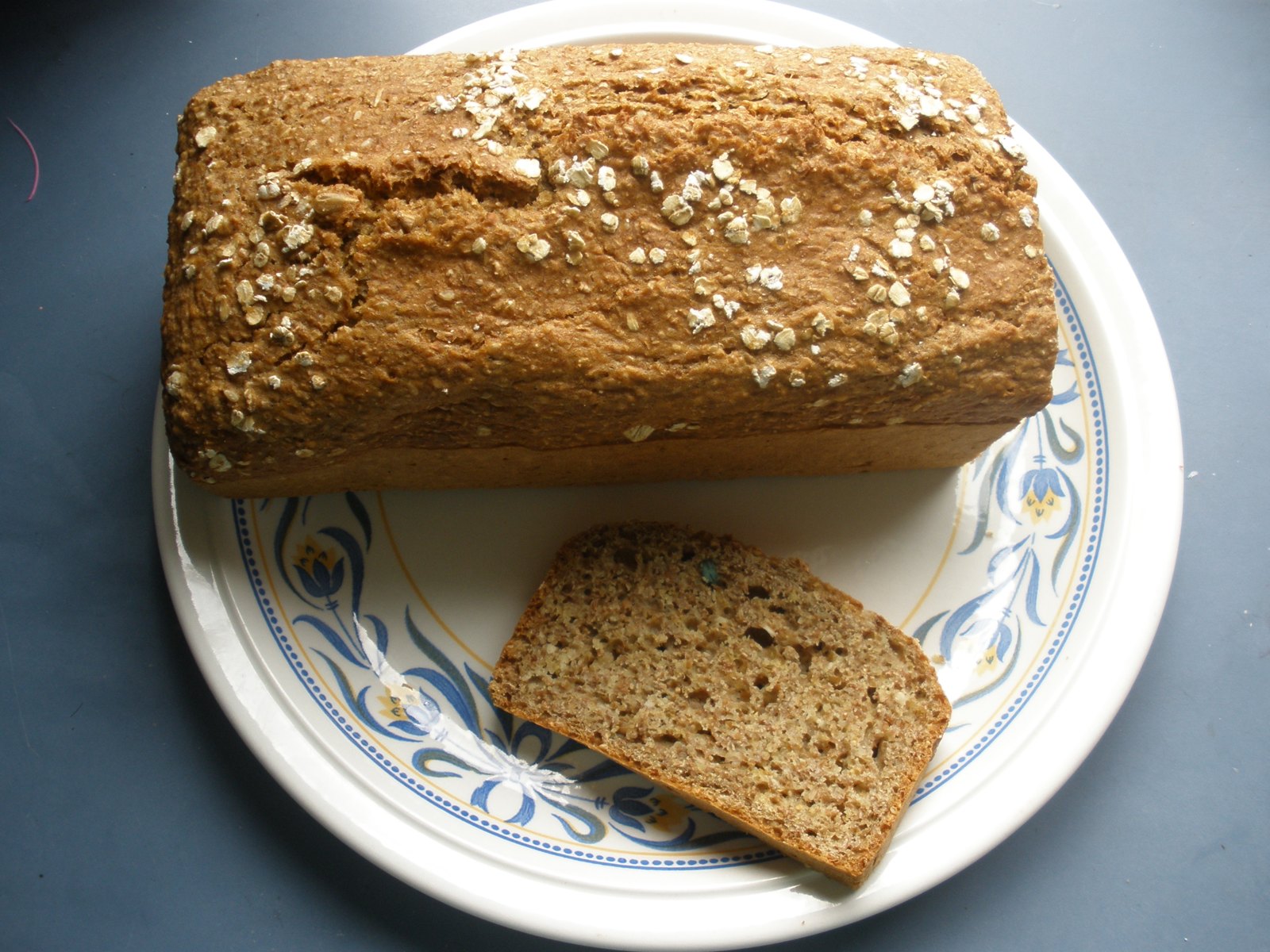
Irish brown soda bread
A quick buttermilk tin loaf raised with bicarbonate of soda.
- Total time
- 135 min
- Servings / pieces
- 1
- Topic
- Bread & rolls
Soda bread needs neither yeast nor proofing. Once buttermilk meets bicarbonate, leavening begins, so have the tin ready and the oven preheated. Wholemeal flour gives a hearty crumb while white flour keeps it somewhat lighter. Mix briefly; the dough remains rougher than kneaded yeast dough. Oats on top complement the simple shape. Do not slice immediately after baking: despite the quick preparation, the moist middle still needs time to settle and release steam before it cuts cleanly.
Method
Step by step
- 01
Preheat
Heat the oven to 200°C conventional. Line the loaf tin with baking paper.
- 02
Mix dry ingredients
Thoroughly combine both flours, bicarbonate and salt. Break up bicarbonate lumps to avoid bitter pockets.
- 03
Combine
Whisk egg and buttermilk. Add to the dry mixture and quickly stir with a spoon until no dry flour pockets remain.
- 04
Fill
Immediately transfer to the tin. Smooth with a damp spoon, scatter oats and make a shallow lengthways groove.
- 05
Bake
Bake for 45–55 minutes. A central skewer should emerge without wet dough. Rest for ten minutes, unmould and cool on a rack for at least an hour.
Times are a guide. Your hob, oven and ingredients affect the result; use the cooking cues as well as the clock.
Using bicarbonate correctly
Bicarbonate is not another name for baking powder. Buttermilk supplies the required acidity. Without acid, an unpleasantly soapy taste can remain. Do not simply replace buttermilk with water while keeping the other quantities unchanged.
Slices and storage
This compact bread toasts well in moderately thick slices. Serve with butter, cheese or soup. Freeze separate slices rather than leaving a large loaf exposed for several days; the cut surfaces dry more quickly than an intact crust. A sturdy spoon handles the wet mixture better than a whisk. Scrape the bottom of the bowl, where dry flour often remains. Once the tin is filled, put it straight into the hot oven without adding a further resting stage.
Kitchen questions
One more question?
Why does the top crack?
Cracking is normal for this quickly raised bread; the groove helps direct it.
Do I need to knead?
No. Lengthy kneading is unnecessary and delays baking after the leavening reaction has already started.