Bread & rolls
Crisp-crusted baguettes
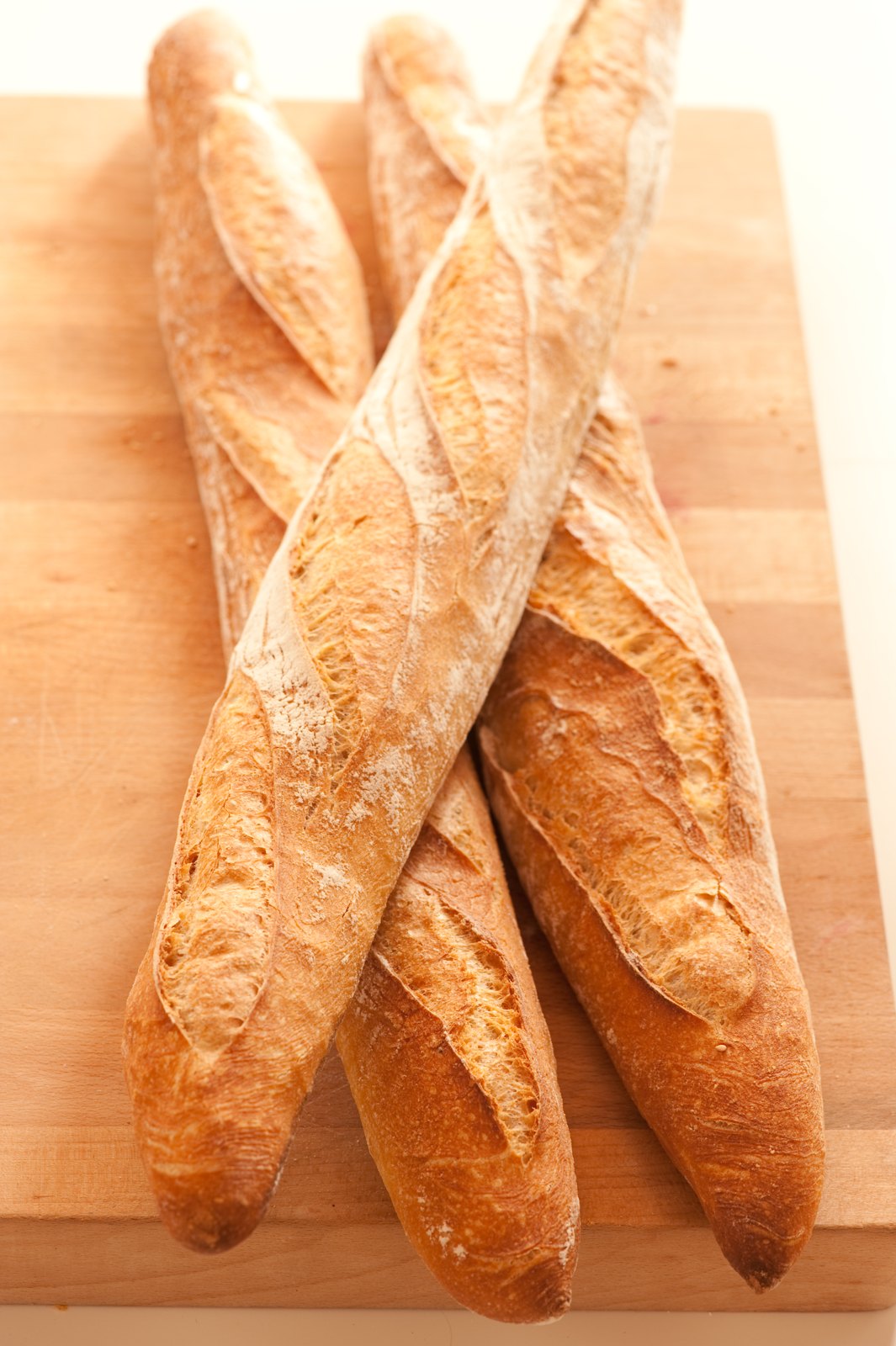
Baguettes contrast a thin crust with an elastic crumb.
- Total time
- 280 min
- Servings / pieces
- 3
- Topic
- Bread & rolls
Baguettes contrast a thin crust with an elastic crumb. Three shorter loaves fit an ordinary home oven. Angled cuts give the dough controlled room to expand, while a little steam delays the initial setting of the crust. The timing includes the stated rises, which can take longer in a cool kitchen. Watch volume and dough tension as well as the clock. Weigh flour and liquid, keeping extra dusting flour separate from the measured dough ingredients.
Method
Step by step
- 01
Mix
Combine flour, water and yeast, rest for 20 minutes, then incorporate salt.
- 02
Develop the dough
Knead for about eight to ten minutes by hand or at low mixer speed. The dough should become cohesive and elastic. Brief pauses help if the mixture still tears readily while you are working it.
- 03
Let rise
Cover and rise for 90 minutes, folding once after 30 and 60 minutes. The dough should become visibly aerated.
- 04
Shape
Divide into three pieces, pre-shape and rest for ten minutes. Roll each into a 35 cm log, seal the seam and prove for 40 minutes.
- 05
Bake
Heat the oven to 240°C conventional. Slash each loaf diagonally three times. Bake for 25–30 minutes, initially placing a metal dish of hot water in the oven. Finish with a deeply golden crust.
- 06
Cool
Cool on a wire rack so steam can escape from the underside too. Slice only once the crumb is no longer hot; cutting too early can compress the interior and make it seem gummy.
Times are a guide. Your hob, oven and ingredients affect the result; use the cooking cues as well as the clock.
Ingredients and dough texture
Strong white flour gives a more extensible structure than very soft cake flour. Slight tackiness is correct. Do not immediately add flour to fix minor irregularities; give the dough a short rest first.
Serving and storing
Serve on baking day with soup or cheese. Halve and freeze for later, then refresh briefly in a hot oven after thawing.
Kitchen questions
One more question?
Why do the cuts stay closed?
Shallow cuts or overproved dough can be responsible.
Can I bake without steam?
Yes, though the crust sets earlier and develops differently.
Can I make shorter baguettes?
Yes; at the same weight they become slightly thicker, potentially needing a little longer. Judge the crust and firm underside rather than treating the original length as essential.