- Total time
- 290 min
- Servings / pieces
- 2
- Topic
- Bread & rolls
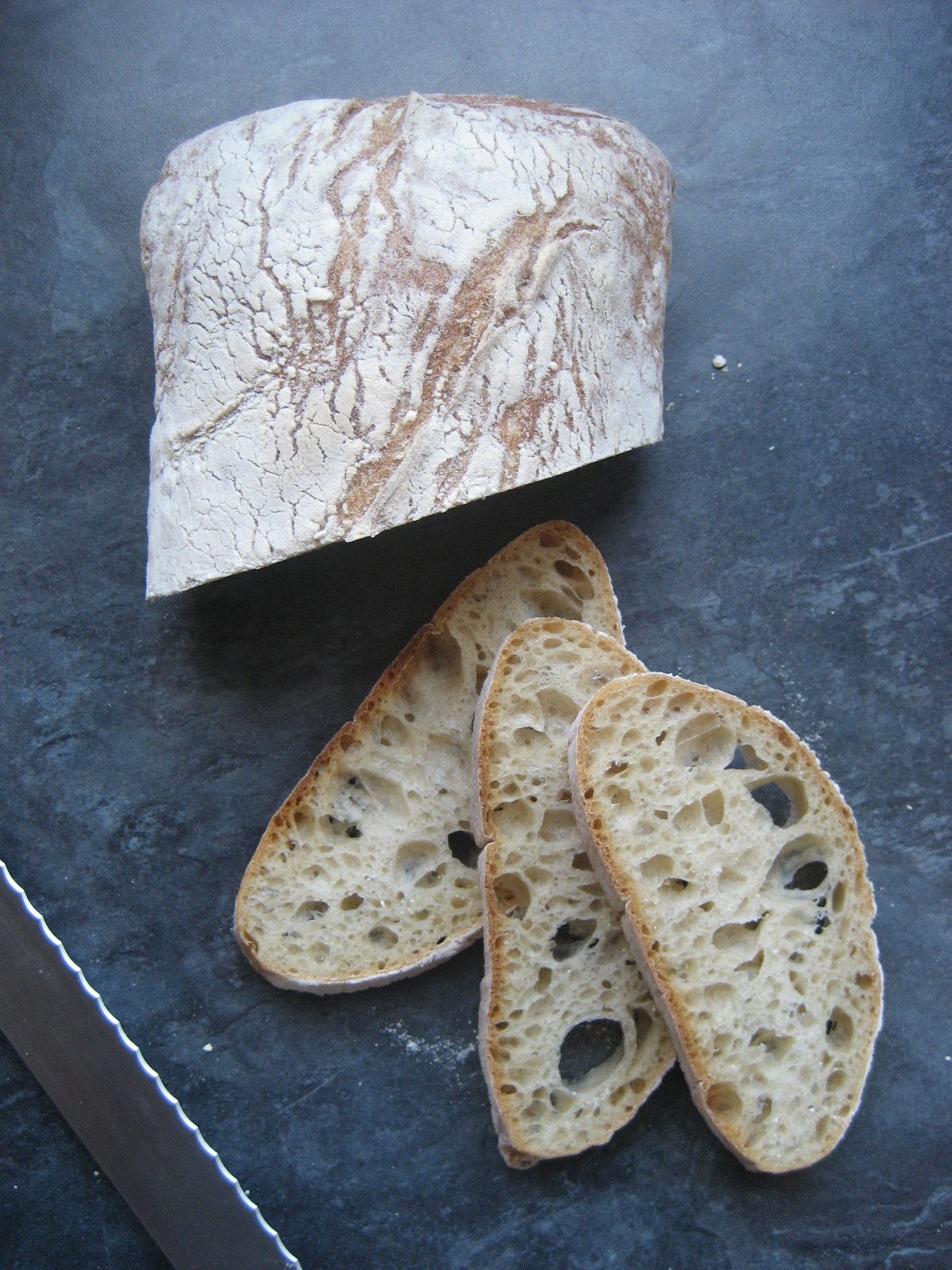
Ciabatta stays deliberately soft before baking. Folding builds strength without stiffening it with flour. Gently divide the flat loaves with minimal degassing to preserve larger bubbles in the irregular crumb. The timing includes the stated rises, which can take longer in a cool kitchen. Watch volume and dough tension as well as the clock. Weigh flour and liquid, keeping extra dusting flour separate from the measured dough ingredients.
Method
Step by step
- 01
Mix
Mix flour and water and rest for 25 minutes. Thoroughly incorporate yeast, salt and oil.
- 02
Develop the dough
Stretch the soft dough in its bowl with damp hands and fold it back over itself. Avoid making it firm with large amounts of extra flour: its high moisture is intentional for an open crumb.
- 03
Let rise
Cover and rise for two hours. Fold three times at 20-minute intervals during the first hour. Look for a bubbly dough.
- 04
Shape
Tip onto a well-floured surface. Use a scraper to divide into two oblong pieces and gently transfer to baking paper. Rest for 40 minutes.
- 05
Bake
Bake in a preheated 240°C conventional oven for 25–30 minutes until deeply golden. The underside should feel dry and firm.
- 06
Cool
Cool on a wire rack so steam can escape from the underside too. Slice only once the crumb is no longer hot; cutting too early can compress the interior and make it seem gummy.
Times are a guide. Your hob, oven and ingredients affect the result; use the cooking cues as well as the clock.
Ingredients and dough texture
The water quantity is higher than for an ordinary tin loaf. A scraper and damp hands are more useful than extra flour inside the dough. Use sufficient surface flour to release the pieces cleanly.
Serving and storing
Split horizontally for sandwiches. Lightly toast slices if the loaf has lost its thin crisp crust by the following day.
Kitchen questions
One more question?
Why does the dough spread?
Some spreading is normal; a complete lack of tension suggests insufficient folding.
Do I need to score it?
No. These gently shaped loaves bake without deliberate cuts.
How do I transfer the soft dough?
Slide a scraper beneath the floured piece and support it broadly. Do not lift by one end. Larger bubbles survive better when the loaf is moved briefly and gently.