Cakes & biscuits
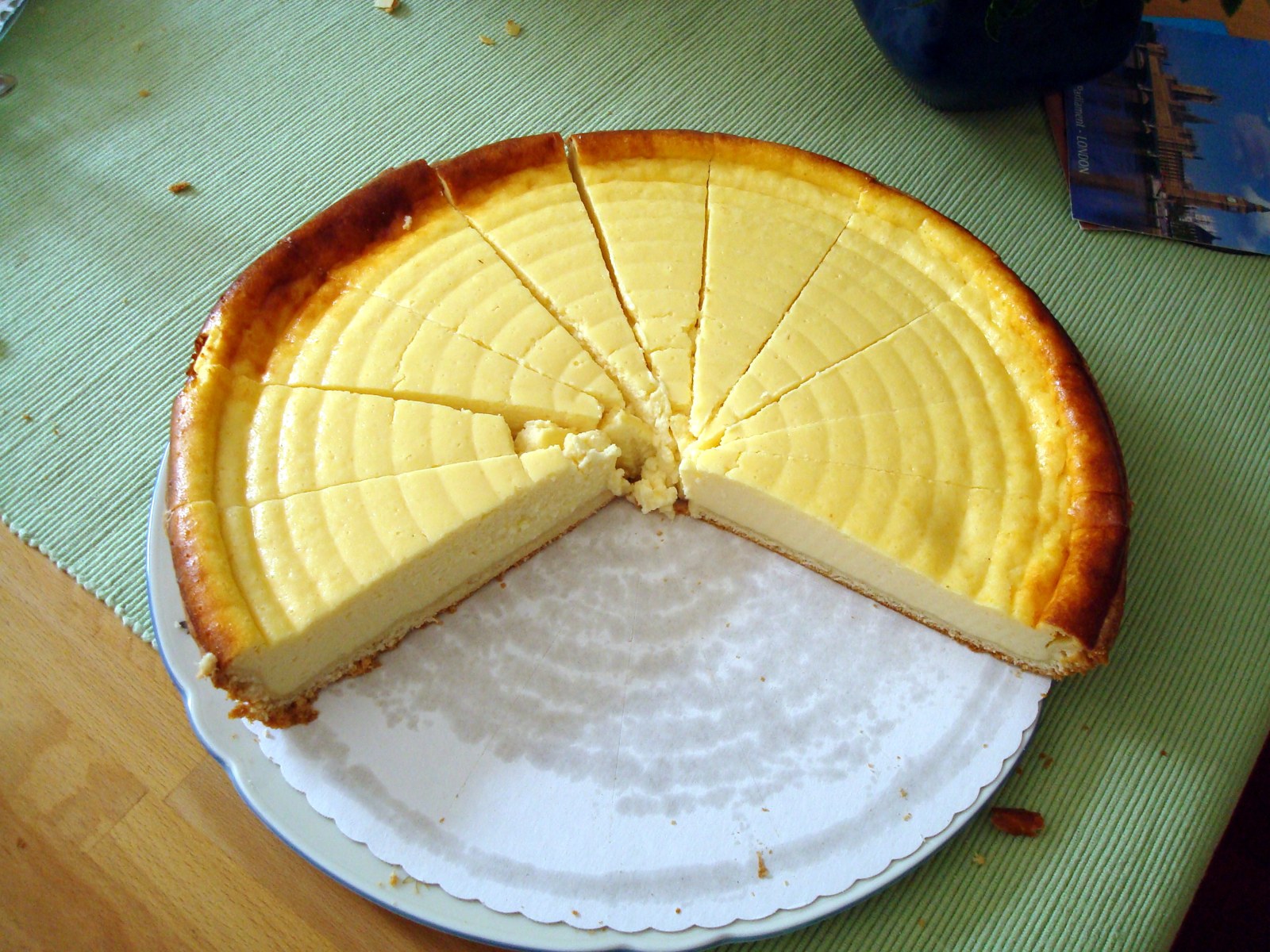
German quark cheesecake with a pastry crust
Quark and soured cream give this cheesecake its pale, gently tangy filling.
- Total time
- 110 min
- Servings / pieces
- 12
- Topic
- Cakes & biscuits
Quark and soured cream give this cheesecake its pale, gently tangy filling. A thin shortcrust base supports the soft centre, while vanilla and lemon zest add fragrance without hiding the dairy flavour. Gentle baking matters more than a deeply coloured top: the centre should still wobble slightly when the oven is switched off and will firm as it cools. Allow at least four hours of chilling in addition to the preparation and baking time. Cutting the cake while warm can make a properly baked filling seem unnecessarily loose.
Method
Step by step
- 01
Make the pastry
Quickly work the flour, 70 g sugar, cubed butter, one egg and salt into a cohesive dough. Flatten and chill for 30 minutes. Stop kneading once combined; warming the butter makes the pastry edge harder to shape.
- 02
Line the tin
Heat the oven to 170°C conventional. Line the tin base with baking paper. Roll out two-thirds of the pastry for the base and press the remaining dough into a rim about 4 cm high. Prick the base several times.
- 03
Mix the filling
Stir the quark, soured cream, remaining sugar, cornflour, vanilla and lemon zest until smooth. Briefly mix in four eggs one at a time. Avoid beating in lots of air, which encourages the top to rise and then collapse.
- 04
Bake gently
Pour into the pastry case and bake on the lower middle shelf for 60–70 minutes. The edges should be set but the centre should still tremble gently when nudged. Cover loosely with baking paper if the surface colours early.
- 05
Cool gradually
Switch off the oven and leave the cake inside with the door ajar for 20 minutes. Cool completely on a rack before releasing the ring. Cover, refrigerate for at least four hours, and cut using a warm knife wiped between slices.
Times are a guide. Your hob, oven and ingredients affect the result; use the cooking cues as well as the clock.
Reducing cracks
Excessive heat and an airy filling encourage cracking. A small crack does not harm the flavour. Do not keep baking until the whole cake is rigid, as this dries out the outer portions.
Working with quark
Pour away any watery liquid on top of the quark before weighing. Cornflour helps bind the egg and quark mixture; it does not replace flour in the pastry. Full-fat quark produces a richer filling but does not replace the soured cream.
Kitchen questions
One more question?
Can I bake it a day ahead?
Yes. Overnight chilling makes the cake particularly easy to slice neatly. Keep it refrigerated until serving.
Why is liquid collecting on top?
The cake may have been covered or cut while warm. Let it cool fully before covering, and gently blot any condensation.
.jpg)
