Cakes & biscuits
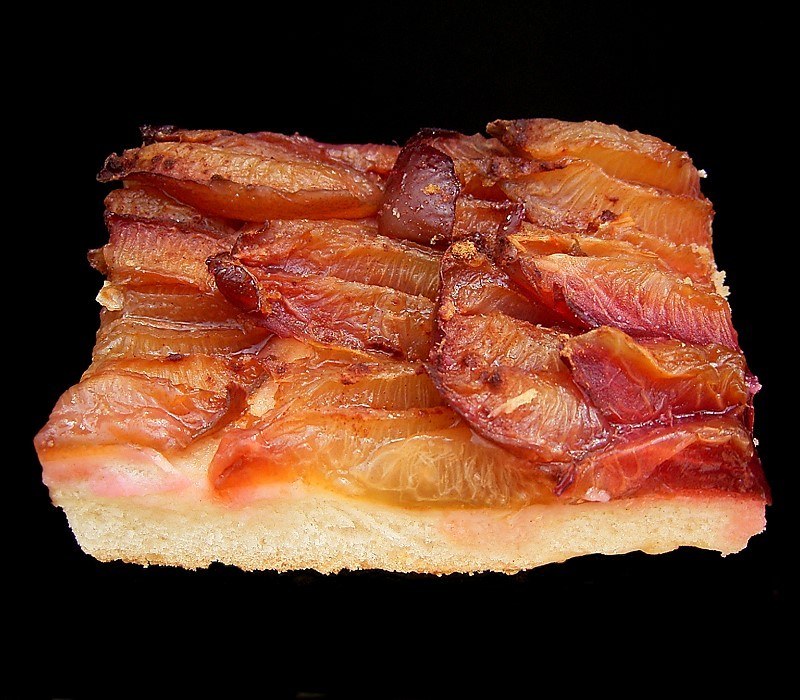
Plum tray cake with a thin yeast base
A thin yeast base supports closely arranged plums in this tray cake.
- Total time
- 130 min
- Servings / pieces
- 20
- Topic
- Cakes & biscuits
A thin yeast base supports closely arranged plums in this tray cake. Place the fruit cut-side up so its juice does not immediately soak the dough. A restrained amount of cinnamon leaves the tart fruit in the foreground. Choose ripe but firm plums, since very soft fruit releases excessive liquid. A small raised edge catches escaping juices. The cake is pleasant lukewarm with cream served separately, although cooling it completely makes cleaner slices. The dough is deliberately fairly soft and should not be stiffened with unnecessary flour.
Method
Step by step
- 01
Knead the dough
Mix flour and yeast. Add milk, sugar, butter, egg and salt and knead for eight minutes until elastic. Cover and leave for about 50 minutes until visibly expanded. Cold ingredients will lengthen the resting time.
- 02
Prepare the plums
Wash and dry fruit thoroughly. Halve lengthways and remove stones. Make a short extra cut at one end of each half without separating it completely. Trim very soft or damaged areas, which would release too much juice.
- 03
Roll the base
Line the tray. Roll dough on a lightly floured surface to fit and transfer to the tray. Form a narrow raised edge. Sprinkle with breadcrumbs to absorb some fruit juice. Heat the oven to 190 °C conventional heat.
- 04
Arrange the fruit
Set plum halves closely on the dough, cut-side up, overlapping like roof tiles. Avoid pushing them deeply into the dough. Mix topping sugar and cinnamon and scatter evenly. Rest the assembled cake at room temperature for another 15 minutes.
- 05
Bake the cake
Bake just below the centre for 35–40 minutes. The dough edges should be golden and the base cooked through, while the fruit becomes soft and glossy. Cool on a rack for at least 20 minutes before cutting the first pieces.
Times are a guide. Your hob, oven and ingredients affect the result; use the cooking cues as well as the clock.
Using round plums
Very juicy round plums work but increase the moisture. Cut into smaller wedges and avoid arranging them excessively densely. Firmer damson-type plums usually retain their shape and fit more neatly into even rows.
A pale underside
A heavily topped cake needs sufficient bottom heat. Avoid the highest oven shelf. If the top is ready but the underside pale, bake a few extra minutes lower down, loosely covering the fruit if necessary.
Kitchen questions
One more question?
Can I freeze the cake?
Yes. Cool completely, cut into portions and package. After thawing, briefly warm at 150 °C.
Does the dough need more flour?
It should be slightly soft. Knead for several minutes before deciding, then add extra flour sparingly to avoid a dry base.
.jpg)