Cakes & biscuits
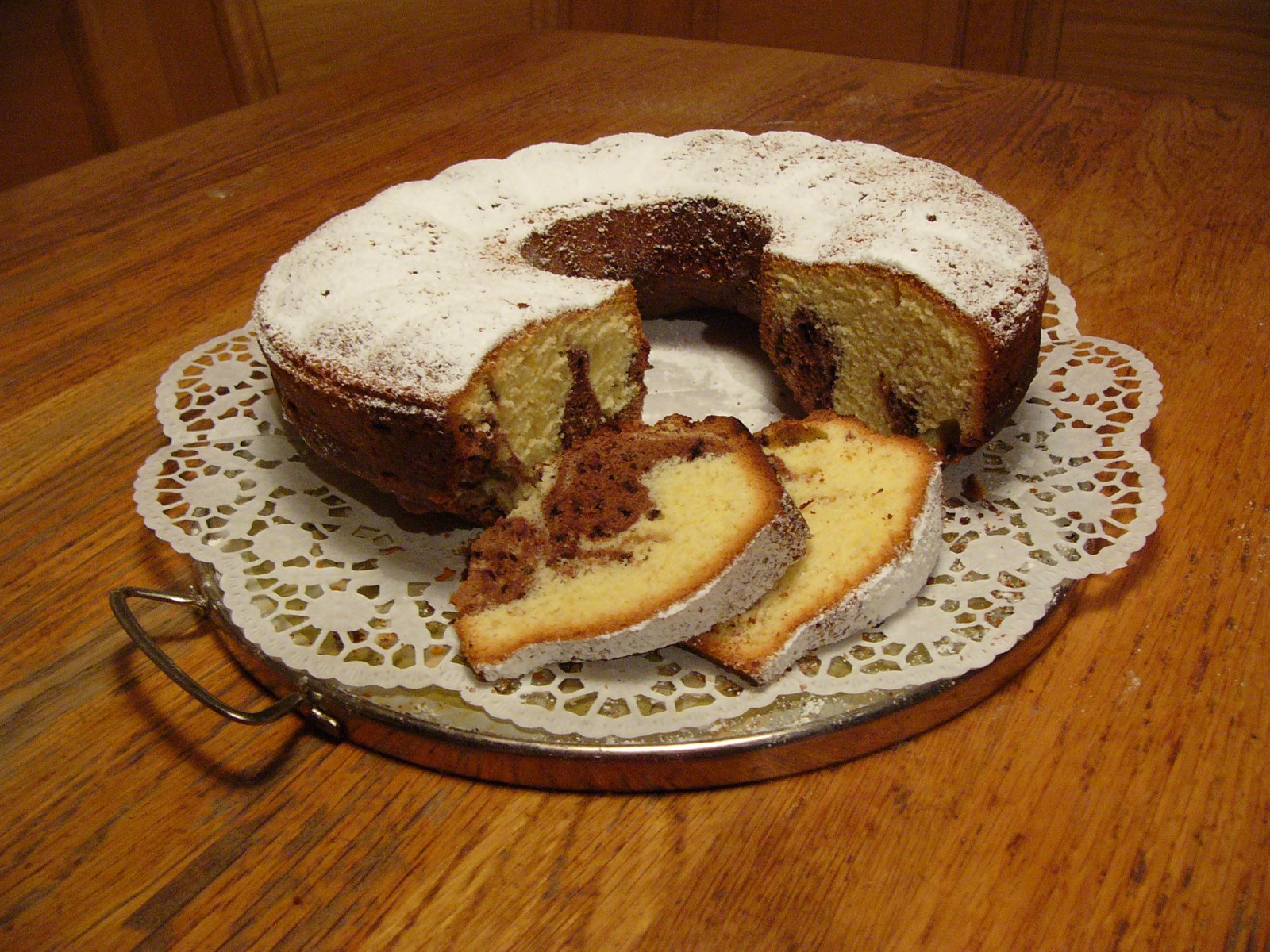
Marble bundt cake with vanilla and cocoa
Swirl vanilla batter and cocoa batter together only briefly in the tin to keep their patterns distinct.
- Total time
- 85 min
- Servings / pieces
- 16
- Topic
- Cakes & biscuits
Swirl vanilla batter and cocoa batter together only briefly in the tin to keep their patterns distinct. Soft butter and room-temperature eggs combine more readily into an even mixture; very cold ingredients can make it curdle. Extra milk in the dark batter compensates for the cocoa absorbing moisture. Greasing and flouring every groove matters particularly with a bundt tin, where many ridges can cling to the cake. Turn it out after a short rest, but do not let it cool completely inside the tin.
Method
Step by step
- 01
Prepare the tin
Heat the oven to 170 °C conventional heat. Thoroughly grease every groove of the bundt tin and dust lightly with flour. Tap out the excess. Eggs and milk should not be icy cold from the refrigerator.
- 02
Cream the butter
Beat butter, sugar, vanilla and salt for four minutes until pale and creamy. Add eggs individually, beating for about 30 seconds each. Scrape down the bowl occasionally so no lumps of butter remain.
- 03
Add flour briefly
Combine flour and baking powder. Mix in on low speed in two or three additions, alternating with 120 ml milk. Stop when no dry flour remains. Prolonged mixing makes the finished cake firmer.
- 04
Create the pattern
Put about two thirds of the batter into the tin. Mix the remainder with cocoa and two tablespoons extra milk. Spoon over the pale batter. Draw a fork through both layers in one spiral movement without completely mixing them.
- 05
Bake and release
Bake on a shelf just below the centre for 50–60 minutes. A skewer should emerge without liquid batter. Rest in the tin for ten to 15 minutes, then turn onto a rack. Cool completely and dust with icing sugar if desired.
Times are a guide. Your hob, oven and ingredients affect the result; use the cooking cues as well as the clock.
If the mixture curdles
A slightly grainy appearance does not mean it must be discarded. A tablespoon of the measured flour can help when adding the next egg. Bring ingredients to a similar temperature beforehand and avoid adding all the eggs at once.
Keeping a clear pattern
Do not repeatedly stir through the tin. One movement is enough for distinct light and dark areas. Extra cocoa without liquid makes the dark layer drier, so include the stated small addition of milk.
Kitchen questions
One more question?
Can I use a loaf tin?
One small loaf tin is insufficient. Use two tins or reduce the ingredients appropriately for a 25 cm tin.
Why does the cake stick?
The grooves may not have been evenly greased, or it was turned out immediately. Thorough preparation and a short rest help it release.
.jpg)
