Bread & rolls
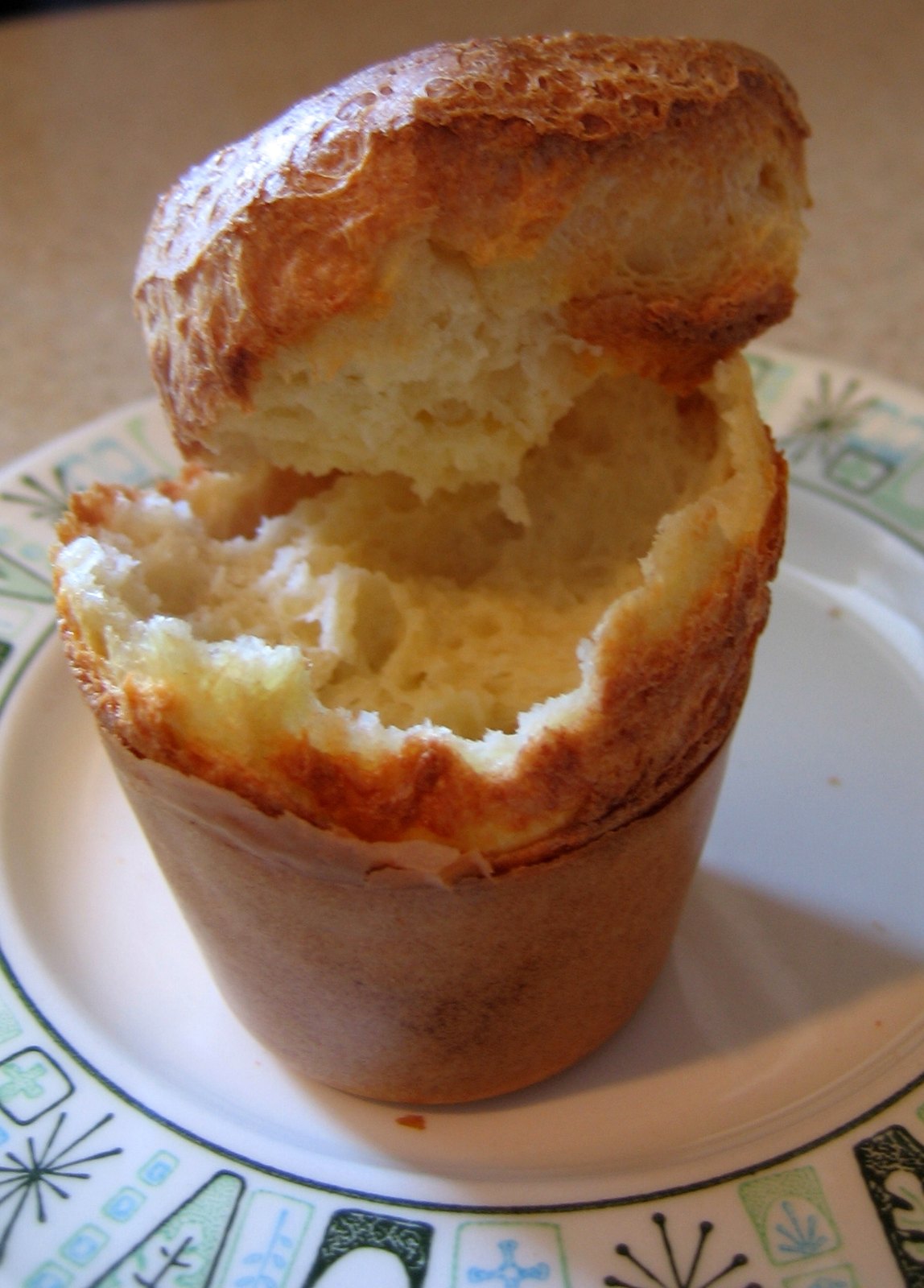
Muffin-tin popovers
Airy egg breads with hollow centres and crisp edges.
- Total time
- 50 min
- Servings / pieces
- 12
- Topic
- Bread & rolls
Popovers rise through steam and need neither yeast nor baking powder. Thin egg-and-milk batter expands in the hot tin and forms a light shell. Keep the oven door closed during the first stage. A subsequent lower temperature dries the walls so they do not immediately collapse. An ordinary metal muffin tin is sufficient for these small portions. Silicone transfers heat differently and is not the first choice here. Time the meal so the popovers reach the table shortly after baking.
Method
Step by step
- 01
Prepare
Heat the oven to 230°C conventional. Thoroughly grease the holes and surrounding top surface.
- 02
Whisk
Thoroughly whisk eggs, milk and salt until no separate yolk streaks remain.
- 03
Add flour
Add flour at once and whisk briefly until smooth. Stir in lukewarm melted butter.
- 04
Fill and start
Fill holes about one-half to two-thirds full. Bake on a lower-middle shelf for 20 minutes without opening the door.
- 05
Finish
Reduce to 180°C and bake for 12–17 minutes more until deeply golden and firm. Pierce a small steam opening and serve immediately.
Times are a guide. Your hob, oven and ingredients affect the result; use the cooking cues as well as the clock.
Using heat effectively
A fully preheated oven is essential. Cold ingredients delay steam development. Keep the batter fluid: extra flour does not make taller popovers, but heavier cakes that cannot expand as freely.
Serve promptly
The cavities suit butter or a small spoonful of fruit preserve. Popovers also complement savoury soup. Briefly refresh leftovers in the oven, accepting that they will not regain precisely the same texture as freshly baked shells. Fill adjacent holes to similar levels. Different batter quantities rise differently and do not dry at the same speed. Leave enough space above the tin so the expanding shells do not hit an upper shelf. Keep the tin level when moving it.
Kitchen questions
One more question?
Why do they collapse?
Insufficient drying or opening the door early can weaken the walls.
Do I need baking powder?
No. Steam supplies the lift in this recipe.
Does the tin need room above it?
Yes. The shells rise well above the holes. A shelf immediately above can obstruct them or overbrown the tops. Position the tin below the oven centre with sufficient clear space.