- Total time
- 155 min
- Servings / pieces
- 24
- Topic
- Bread & rolls
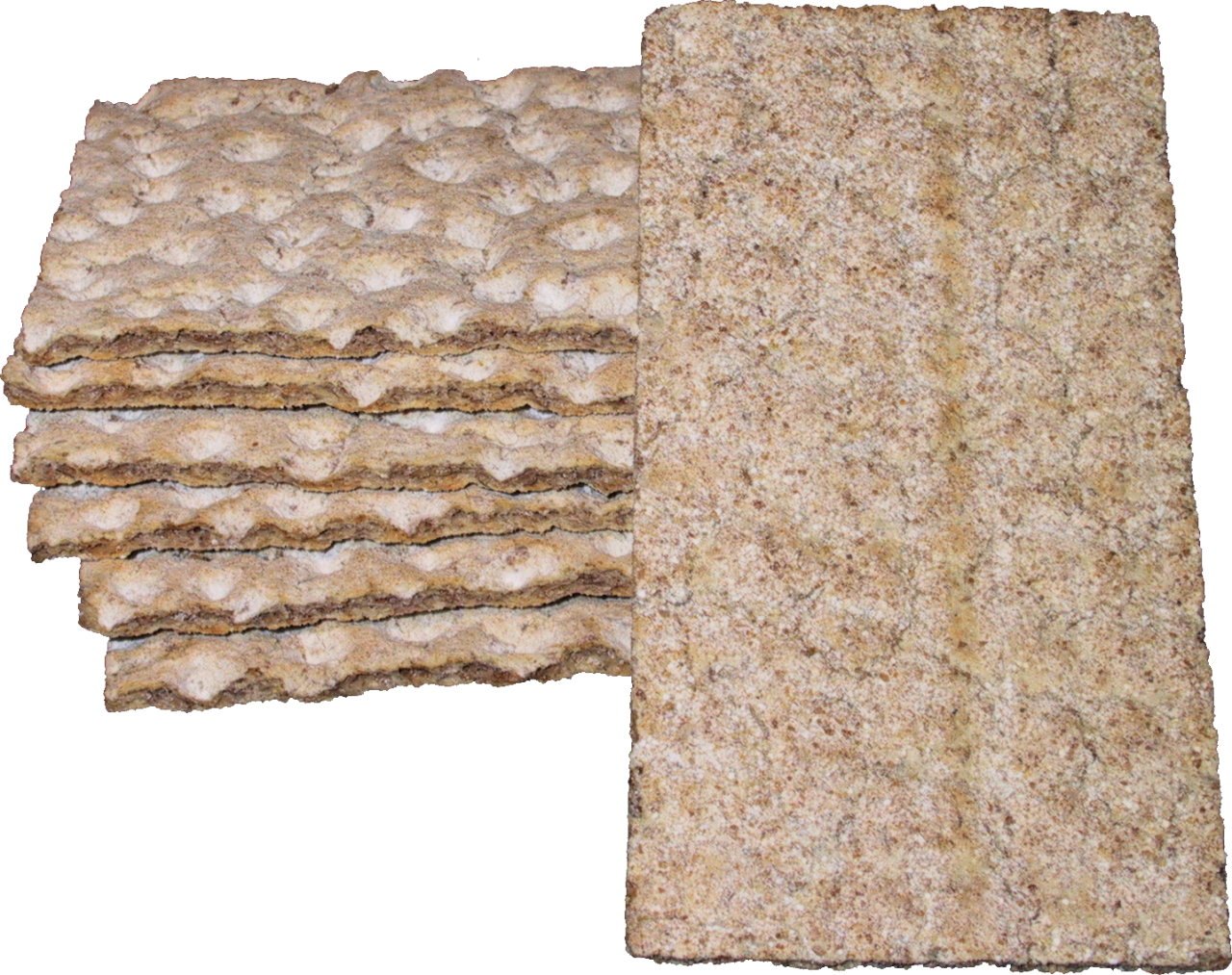
Crispbread gains its keeping texture from very little remaining moisture. Roll the dough thin and prick it closely all over. This version combines rye and wheat flour with a small amount of yeast. A short rest lightens the structure without making a tall loaf. Mark the sheets before baking. The initial bake is followed by a lower-temperature drying stage; the actual crispness after cooling matters more than following an inflexible number of minutes regardless of thickness.
Method
Step by step
- 01
Mix dough
Combine all ingredients into a firm, slightly sticky dough.
- 02
Rest
Knead together briefly and cover for 35 minutes. Heat the oven to 220°C conventional.
- 03
Roll
Halve the dough and roll each portion between paper sheets approximately two millimetres thick. Remove the upper paper.
- 04
Mark
Score a total of 24 rectangles and prick closely with a fork. Bake trays individually for 12–16 minutes until the edges colour.
- 05
Dry
Reduce the oven to 110°C. Separate pieces and dry for 20–30 minutes. Cool fully and check one piece for a dry, crisp snap.
Times are a guide. Your hob, oven and ingredients affect the result; use the cooking cues as well as the clock.
Even thickness
Thick spots remain soft while thin edges darken. Make use of the whole tray surface when rolling. These thin sheets do not require a baking stone; an ordinary tray works well if the dough is rolled evenly.
Dry storage
Pack airtight only once completely cold. Crispbread that softens can be briefly dried again at low temperature. Serve with cream cheese, butter or a vegetable spread that is not excessively runny and likely to soften the surface immediately. Test crispness on a cooled piece: warm crispbread can still seem somewhat flexible. If the cold centre stays chewy, dry it again at low heat. Very dark edges are not reliable evidence that a thicker middle has already dried through.
Kitchen questions
One more question?
Why are there large bubbles?
The dough may not have been pricked thoroughly enough.
Can I use only rye?
That needs adjusted hydration and handling; wheat flour makes this version easier to roll.
How should I separate even pieces?
Use the marked lines while the sheets still yield slightly after their initial bake, then dry separately. Fully hard, unmarked sheets tend to break into irregular shards rather than the intended rectangles.