Kitchen know-how
Making a pale roux without lumps
Butter, flour and liquid become a smooth sauce when you control the sequence.
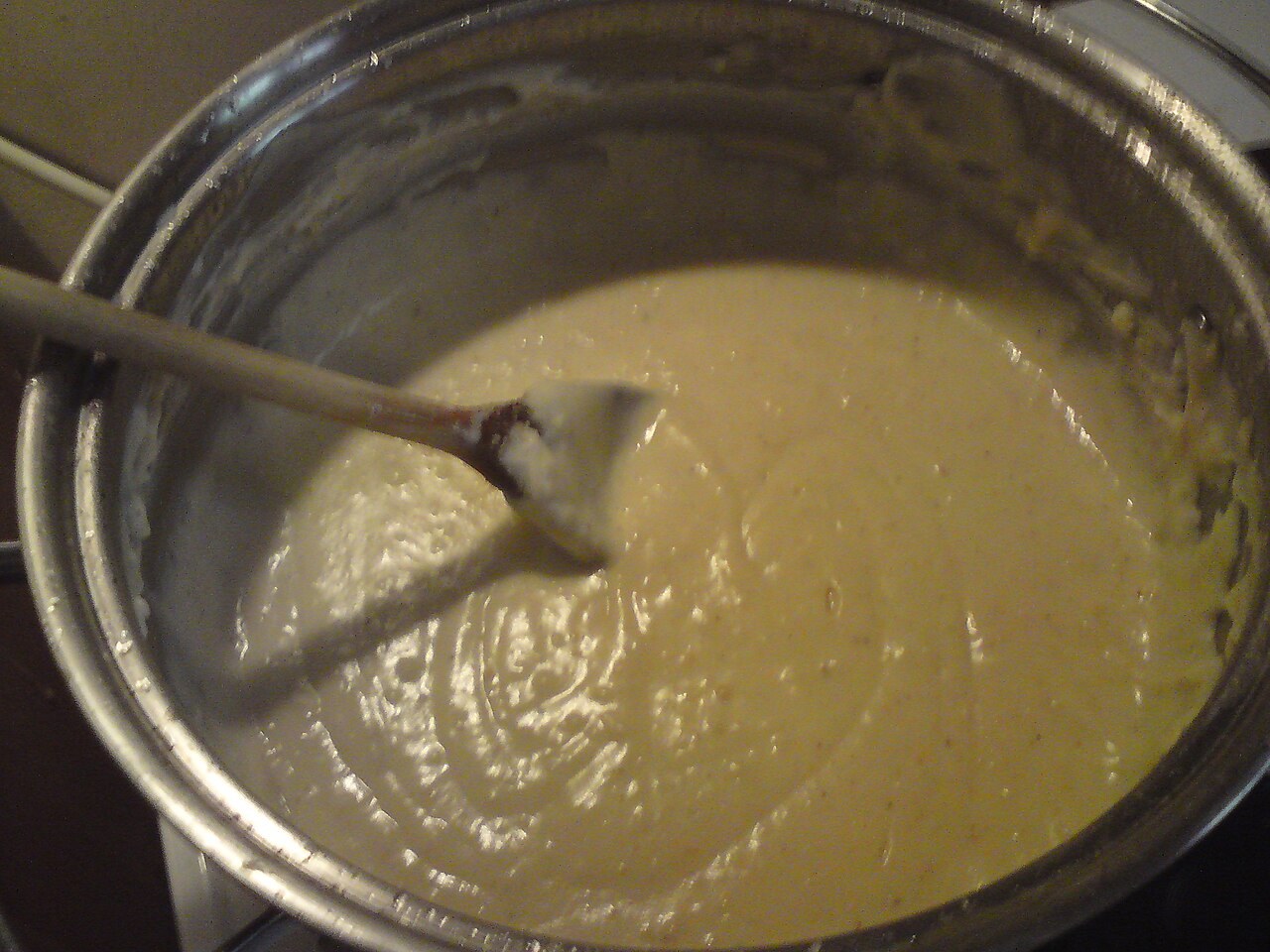
A pale roux is the starting point for many creamy sauces. Flour is first dispersed in fat before liquid is introduced. The important stage is quite modest: an even, pale paste forms on the bottom of the pan. A whisk and small additions of liquid help control its transition into sauce. You do not need a collection of specialist equipment.
Start with a manageable quantity
For a simple practice batch, use around 30g butter, 30g wheat flour and 500ml milk as a starting point for a medium-thick sauce. This is a basic mixture; cooking time and intended use also affect the final consistency. Weigh everything before heating the pan and have a whisk ready so you are not searching while stirring.
Melt butter and incorporate flour
Melt the butter over medium-low heat in a saucepan with a reasonably broad base. Add the flour and stir immediately into a uniform paste. No dry pockets should remain. For a pale sauce, avoid substantial browning. Reduce the heat if the mixture at the bottom begins taking on colour too quickly.
Cook the paste briefly
Stir the pale paste for about one to two minutes without letting it darken. This distributes flour and fat evenly and changes the raw flour smell. Work the whisk into the junction between the base and sides too. A pan with particularly tight corners can collect firm residue in areas that are easy to miss.
Add liquid in small portions initially
Take the pan briefly off the heat if that gives you more control. Add a small splash of milk and whisk firmly until smooth again. The mixture becomes very thick at first; that is normal. Add the next portion only once visible lumps disappear. As the mixture becomes thinner and more even, the remaining liquid is easier to incorporate.
Simmer gently and check thickness
Heat while stirring until the sauce reaches a gentle simmer, then cook softly for several minutes. It continues thickening as it heats. Season with salt, pepper and optional nutmeg at this stage. Whisk in additional liquid for a thinner result. Do not scatter dry flour directly from the bag into a sauce that seems too thin.
Correct the particular problem
Small lumps may be resolved with firm whisking or a fine sieve. Blending cannot remove the flavour of a burnt sauce. Carefully pour off the unscorched portion without scraping the base, then assess its taste. For a larger batch, an adequately sized pan matters more than simply turning the heat up.
Kitchen questions
One more question?
Can I use stock instead of milk?
Yes, if it suits the sauce you want. Add salt cautiously because stock may already be seasoned. Choose the thickness for the intended dish.
Must the liquid be hot or cold?
Controlled additions and thorough whisking are essential. Follow your recipe; milk added gradually is easy to manage in this practice method.
Why does sauce thicken as it stands?
It cools and can lose water through evaporation. Whisk in small amounts of liquid as needed during reheating.

.jpg)
