Bread & rolls
Braided sesame challah
Challah gains its golden surface from egg and its tender bite from oil.
- Total time
- 320 min
- Servings / pieces
- 1
- Topic
- Bread & rolls
Challah gains its golden surface from egg and its tender bite from oil. The braid needs space to expand. Plait loosely enough to prevent tight connections tearing during the second rise. The timing includes the stated rises, which can take longer in a cool kitchen. Watch volume and dough tension as well as the clock. Weigh flour and liquid, keeping extra dusting flour separate from the measured dough ingredients.
Method
Step by step
- 01
Mix
Combine flour, water, two eggs, yeast, sugar, oil and salt.
- 02
Develop the dough
Knead for about eight to ten minutes by hand or at low mixer speed. The dough should become cohesive and elastic. Brief pauses help if the mixture still tears readily while you are working it.
- 03
Let rise
Cover and rise for 90 minutes until approximately doubled.
- 04
Shape
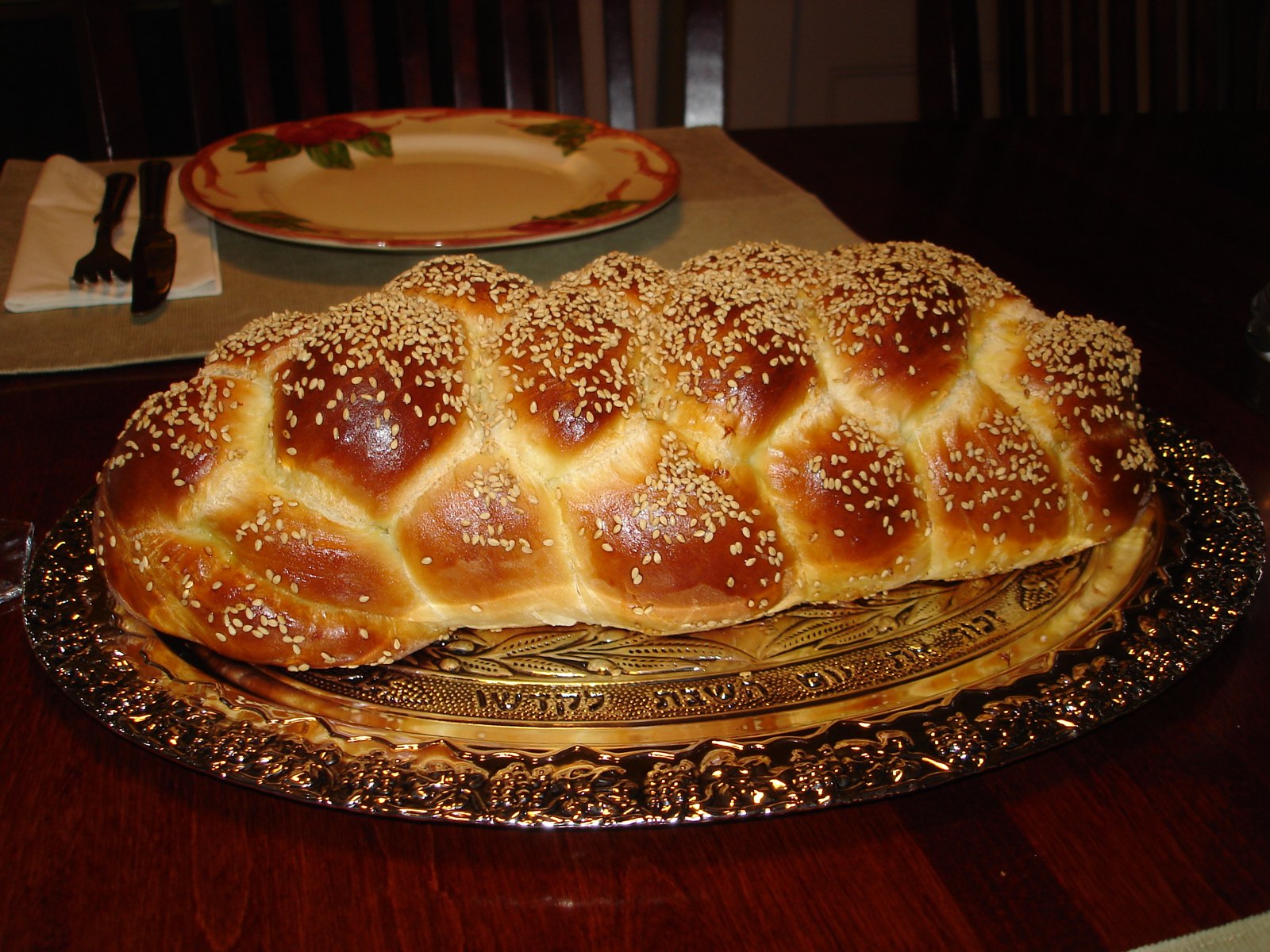
For a simple braid, make three equal ropes and plait loosely. Tuck the ends under and prove for 45–60 minutes. Brush with beaten egg and scatter sesame.
- 05
Bake
Bake at a preheated 185°C conventional for 30–38 minutes until golden. The joins between the ropes should be baked through too.
- 06
Cool
Cool on a wire rack so steam can escape from the underside too. Slice only once the crumb is no longer hot; cutting too early can compress the interior and make it seem gummy.
Times are a guide. Your hob, oven and ingredients affect the result; use the cooking cues as well as the clock.
Ingredients and dough texture
This version uses oil rather than butter. Some eggs belong in the dough and one is reserved for glazing. A thin glaze is enough; avoid egg puddles in the joins.
Serving and storing
Slice thickly or pull apart. Leftovers suit croutons or bread pudding. The more elaborate braid in the photograph depicts the same bread; these instructions use three ropes.
Kitchen questions
One more question?
Can I use six strands?
Yes; with the same total weight, use the same baking checks.
Why does the braid tear?
The strands may have been too tight or the final proof too short.
How can I prevent very dark braid peaks?
The highest points brown first. A loose cover can moderate the final stage. Avoid covering tightly too early so the surface sets and the egg glaze does not stick to the covering.