Kitchen know-how
Creaming butter and sugar: building air into cake batter
Recognise a light butter mixture before the eggs and flour go in.
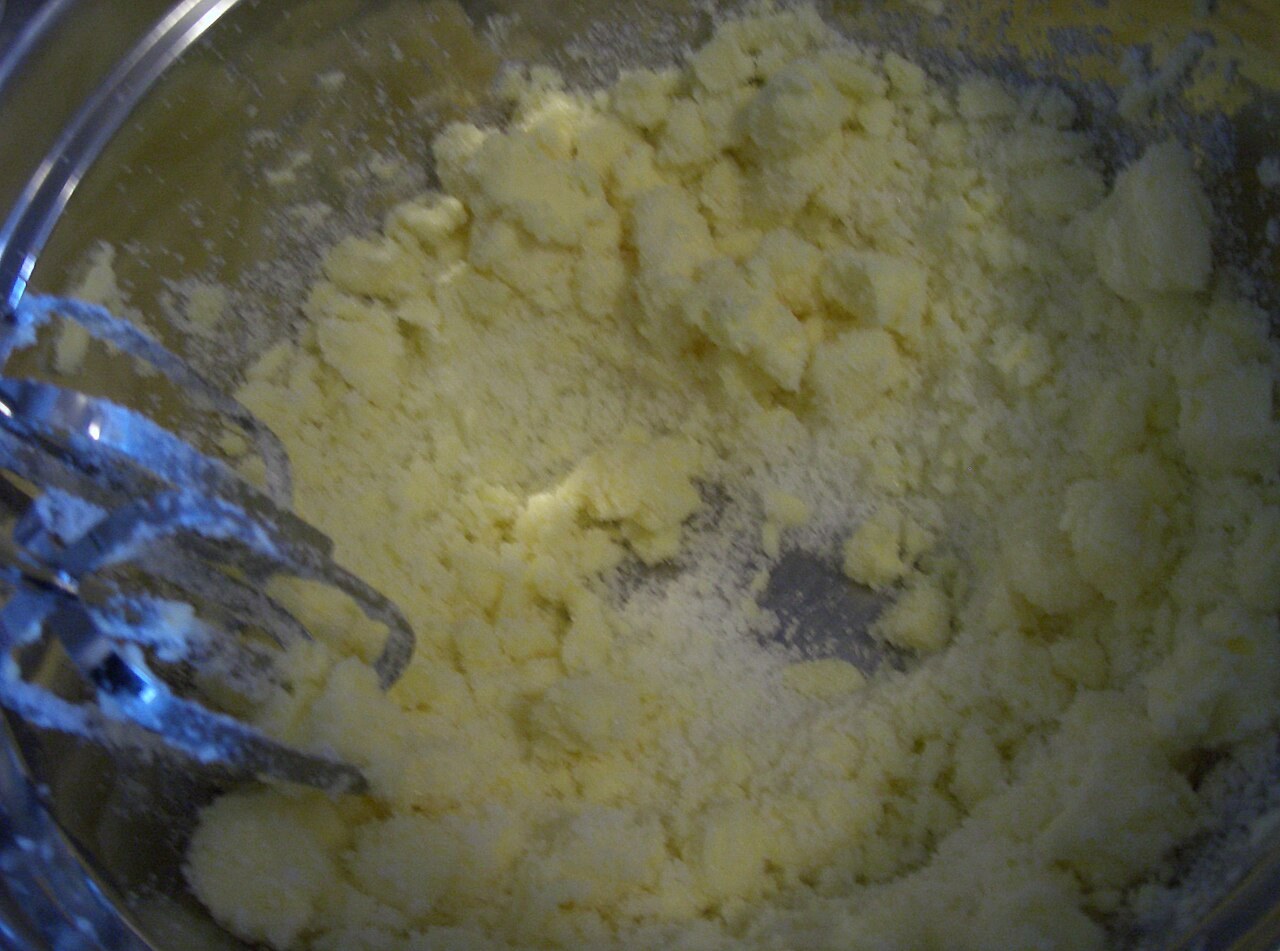
The texture of a classic creamed cake begins long before it reaches the oven. Butter and sugar are not simply combined: mixing works small air pockets into the fat. That initial structure helps the batter rise later. Butter consistency, bowl size and mixing all matter. A fixed number of minutes tells you less than the visible result around the bowl and on the beaters.
Prepare the butter evenly
Cut butter into cubes and allow it to soften consistently. A finger should leave an indentation, but the butter should remain pliable rather than liquid. A hard core creates lumps; a melted surface makes the mixture oily. Check more than the edge of a large block. Small cubes make it easier to tell when the whole portion is ready.
Use an appropriate bowl
In an oversized bowl, a small hand mixer may struggle to reach the butter. Choose one that lets the beaters engage the mixture at the bottom while leaving room for expansion. Start on low to medium speed so sugar stays in the bowl. Increase the speed after the ingredients hold together, and handle the appliance according to its instructions.
Scrape down during mixing
Stop periodically and bring mixture from the sides and bottom into the centre with a flexible spatula. A stand mixer can otherwise leave a compact strip of butter untouched. Switch the machine off before scraping. Then continue until the whole mixture looks even, rather than only the portion directly around the beaters becoming light.
Look for colour and volume changes
A suitable mixture usually becomes paler and visibly lighter. It looks creamy rather than shiny and liquid. Sugar crystals need not disappear completely; this depends on the sugar and the recipe. Do not mix indefinitely while waiting for total smoothness. If prolonged work makes the mixture very warm, a short pause may help more than increasing the speed.
Add eggs in manageable portions
Follow the method by adding eggs individually or in small portions, mixing each addition until incorporated. Large temperature differences can make the mixture look uneven. A slightly curdled appearance is not automatically a ruined batter, but do not correct it with unlimited extra flour. Keep to the recipe’s total weight of dry ingredients.
Mix briefly once flour is added
Once flour and raising agents enter the bowl, the goal changes to an even batter without dry pockets. Do not continue the prolonged beating used for the butter stage. Work promptly according to the recipe, fill the prepared tin and bake in the preheated oven. This sequence differs from cakes deliberately designed around melted butter or oil.
Kitchen questions
One more question?
Can I use a wooden spoon?
Yes, for suitable quantities, although it takes more effort. Soft, pliable butter and an accessible bowl make creaming by hand easier.
Which sugar should I use?
Use the type specified in the recipe. Coarse sugar distributes differently from fine caster sugar; icing sugar is not a universal substitute either.
Why is the mixture not getting paler?
Check butter consistency, beater contact and bowl size first. More speed will not help much if the beaters are missing the mixture.

.jpg)
