Bread & rolls
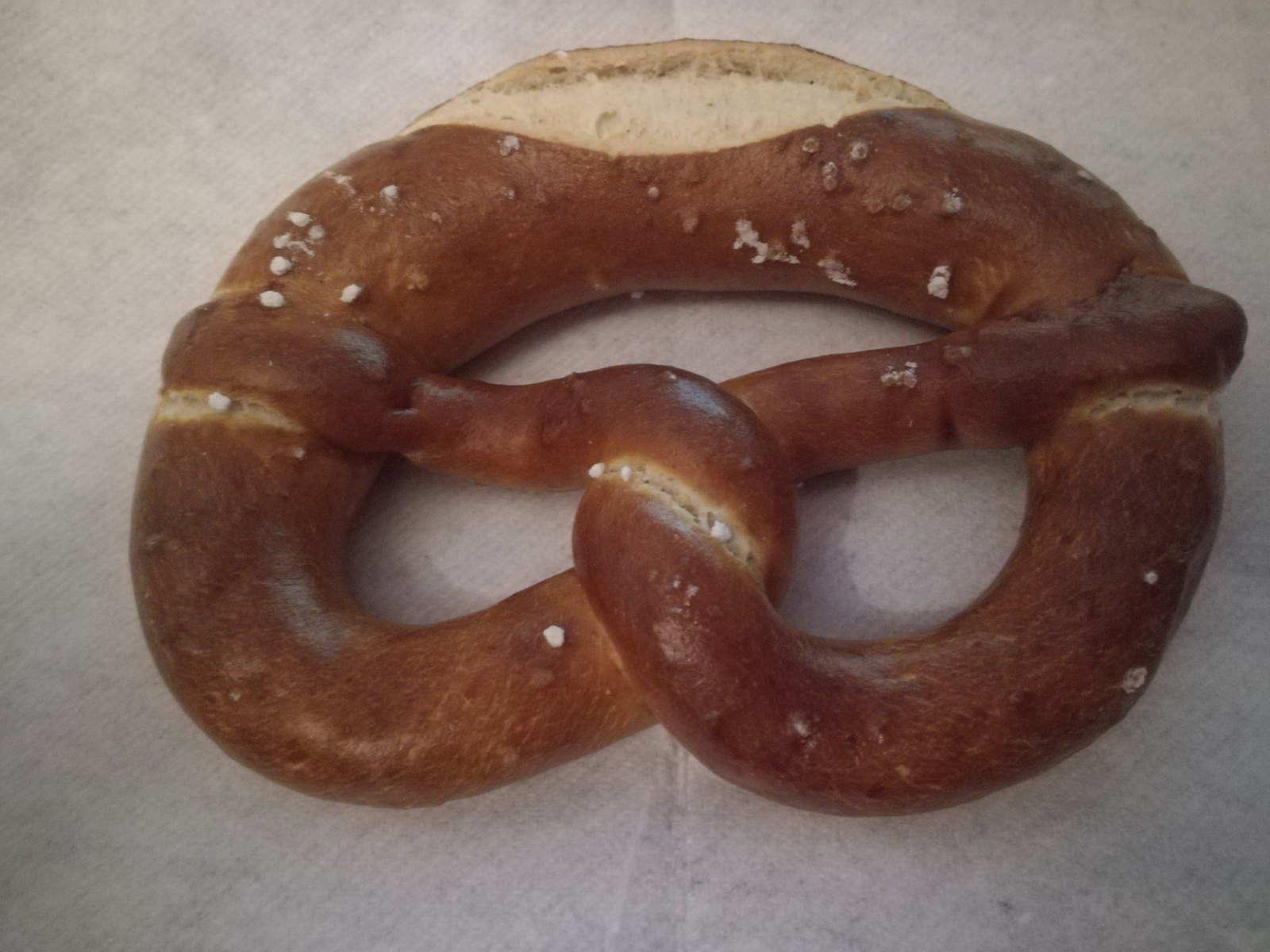
Home-style bicarbonate pretzels
These pretzels receive a bicarbonate bath instead of a lye treatment.
- Total time
- 180 min
- Servings / pieces
- 8
- Topic
- Bread & rolls
These pretzels receive a bicarbonate bath instead of a lye treatment. Their surface browns but stays milder than professional lye pretzels. A thick centre and thin ends create the familiar shape and contrasting textures. The timing includes the stated rises, which can take longer in a cool kitchen. Watch volume and dough tension as well as the clock. Weigh flour and liquid, keeping extra dusting flour separate from the measured dough ingredients.
Method
Step by step
- 01
Mix
Mix flour, water, yeast, butter, fine salt and sugar into a firm dough.
- 02
Develop the dough
Knead for about eight to ten minutes by hand or at low mixer speed. The dough should become cohesive and elastic. Brief pauses help if the mixture still tears readily while you are working it.
- 03
Let rise
Cover and rise for 60 minutes, then divide into eight equal pieces.
- 04
Shape
Roll each into a 55 cm rope with a thick centre. Twist the ends and press onto the belly. Rest somewhere cool for 20 minutes.
- 05
Bake
Heat the oven to 220°C conventional. Boil bath water, carefully add bicarbonate and lower the heat. Dip pretzels individually for 20 seconds, drain, salt and slash the belly. Bake for 18–22 minutes until brown.
- 06
Cool
Cool on a wire rack so steam can escape from the underside too. Slice only once the crumb is no longer hot; cutting too early can compress the interior and make it seem gummy.
Times are a guide. Your hob, oven and ingredients affect the result; use the cooking cues as well as the clock.
Ingredients and dough texture
The bath foams when bicarbonate is added. Use a sufficiently large pan and lower pretzels with a slotted spoon. The stated 60 g belongs in the bath, not in the bread dough.
Serving and storing
Serve fresh with butter or savoury spreads. Coarse salt attracts moisture during storage; freeze unsalted pretzels if keeping them longer. Drain pretzels well after dipping so wet puddles do not collect on the tray. Scatter coarse salt only onto the damp surface. Small darker spots are normal, but a distinctly bitter flavour suggests excessive browning rather than desirable crust development.
Kitchen questions
One more question?
Are these classic lye pretzels?
No, this is explicitly the milder bicarbonate version.
Why do the ends detach?
Slightly moisten their contact points before pressing them down.