German classics
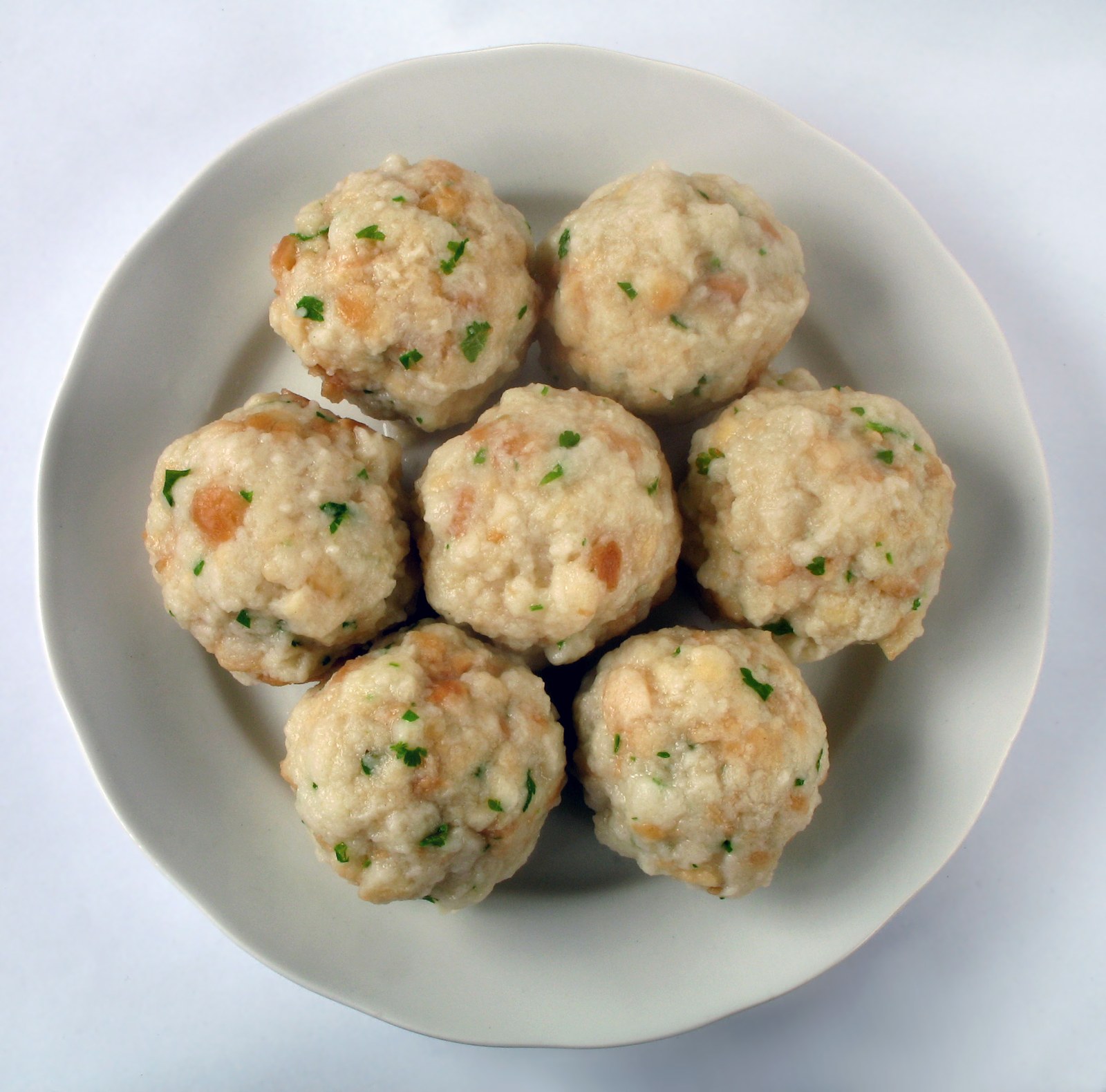
Bread dumplings made with stale rolls
Stale rolls absorb warm milk and become a mixture that can be shaped into dumplings.
- Total time
- 50 min
- Servings / pieces
- 4
- Topic
- German classics
Stale rolls absorb warm milk and become a mixture that can be shaped into dumplings. They should be dry but not rock hard; very hard pieces need longer to soften. Onion and parsley provide seasoning, while eggs hold everything together. Cook the dumplings just below boiling point to preserve their rounded shape. A small test dumpling is useful before cooking the entire batch, showing whether the mixture binds properly. Serve with mushroom ragout or roast meat and gravy, allowing the dumplings to absorb some sauce.
Method
Step by step
- 01
Cut the bread
Slice rolls thinly or cut into cubes about 1 cm across. Place in a large bowl. Cut very dark, hard crusts more finely so they do not remain as tough spots inside the dumplings.
- 02
Soak with milk
Warm milk without boiling vigorously. Pour evenly over the bread. Cover and leave for 15 minutes, turning gently once so upper pieces absorb moisture too. The bread should retain some visible structure.
- 03
Add onion and eggs
Finely dice onion and soften in butter for five minutes. Cool slightly, then add to the bread with eggs and parsley. Season with about half a teaspoon of salt, pepper and nutmeg. Combine gently rather than kneading firmly.
- 04
Cook a test
Bring salted water in a wide pan to a bare simmer. Shape a small test dumpling and poach for five minutes. If it breaks apart, add one tablespoon of breadcrumbs to the mixture and leave for five minutes.
- 05
Poach the dumplings
Use wet hands to shape eight equal dumplings, smoothing the surfaces. Cook in water that is not bubbling vigorously for 18–20 minutes. Cut one open: the centre should be set throughout with no uncooked egg mixture. Drain and serve immediately.
Times are a guide. Your hob, oven and ingredients affect the result; use the cooking cues as well as the clock.
Adjusting milk
Bread varies in density and dryness. Check after soaking for pieces that remain hard. Add an extra tablespoon of warm milk if needed. Avoid immediately stiffening a wet mixture with lots of flour; rest it first and use breadcrumbs sparingly.
Frying leftovers
Slice cooled cooked dumplings. Fry in a little butter over medium heat until golden on both sides. Let a light crust develop before turning. Serve with salad and, if desired, a fully cooked egg.
Kitchen questions
One more question?
Why are the dumplings hard?
Too much extra binding or firm compression can make them dense. Handle gently and add crumbs only after the test.
Can I use sliced sandwich bread?
Its finer texture absorbs liquid differently. Begin with slightly less milk and assess the mixture carefully before shaping.
.jpg)

