German classics
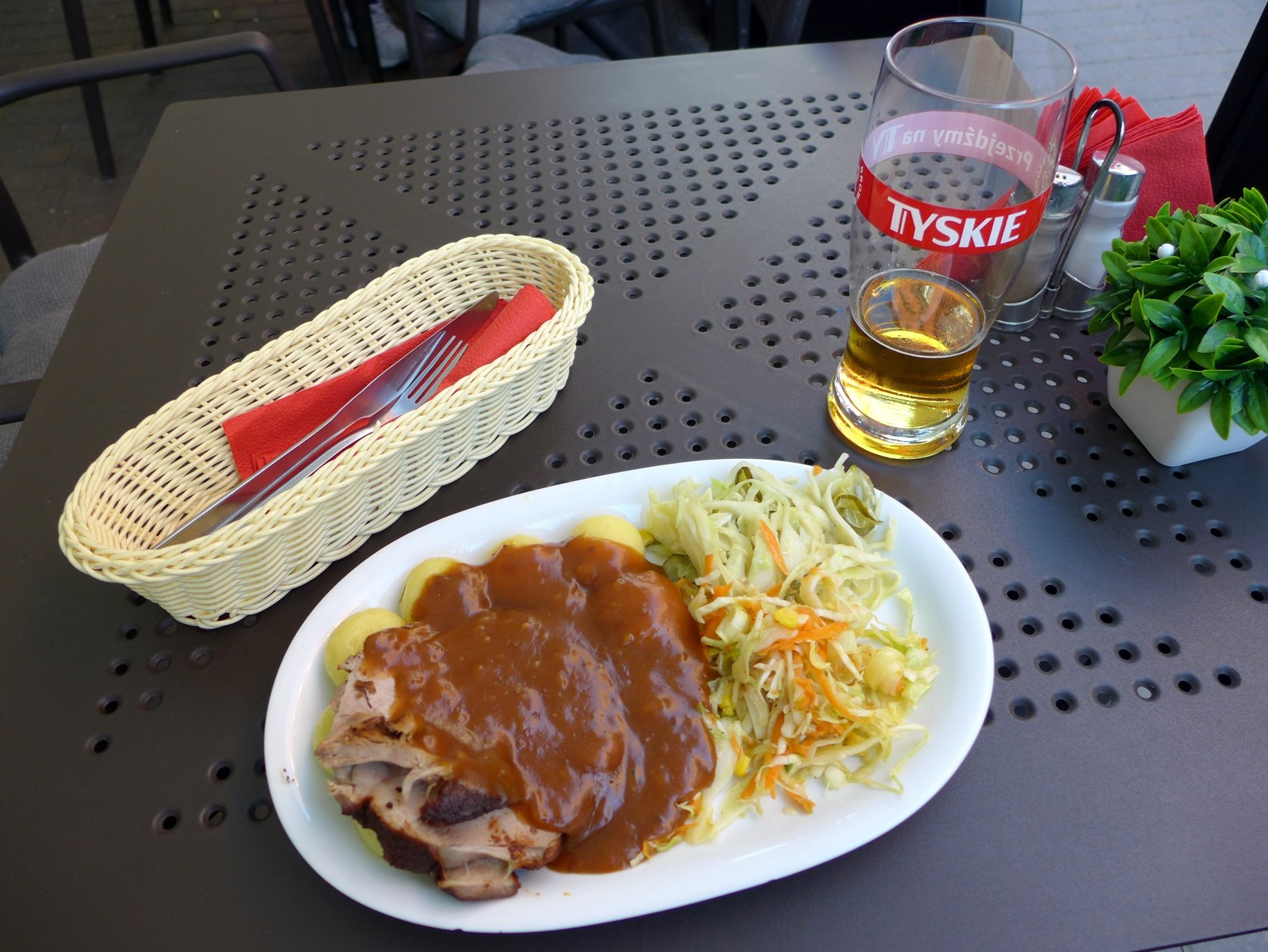
Roast pork shoulder with caraway and onion gravy
Slow-roasted pork shoulder stays succulent and can be sliced after a short rest.
- Total time
- 170 min
- Servings / pieces
- 6
- Topic
- German classics
Slow-roasted pork shoulder stays succulent and can be sliced after a short rest. This recipe uses a skinless joint, avoiding a separate crackling stage. Caraway and marjoram season the gravy while browned onions provide depth. The pork sits on the vegetables and is occasionally basted with its juices. Serve with potato dumplings, cabbage salad or boiled potatoes. The gravy should remain pourable, so only thicken it lightly if necessary. Choose shoulder rather than lean loin, because the cooking time is designed for a well-marbled cut.
Method
Step by step
- 01
Season the joint
Heat the oven to 160 °C conventional heat. Pat the pork dry and rub with salt, pepper, caraway and marjoram. Cut onions into wedges and carrots into chunks. Lightly crush the garlic with the flat side of a knife.
- 02
Brown the surface
Heat oil in the roasting tin on the hob. Brown the pork on all sides for about ten minutes, then remove briefly. Brown vegetables in the fat for five minutes. Add water and loosen the browned deposits with a wooden spoon.
- 03
Roast gently
Place pork on the vegetables and pour in the stock. Roast uncovered on a low shelf for about two to two and a half hours. Baste every 30 minutes. Add hot water if the tin becomes nearly dry.
- 04
Check doneness
The centre should reach at least 75 °C and the meat should feel tender when pierced. Cook longer if the shoulder remains firm. Remove and rest under a loose cover for ten to 15 minutes while making the gravy.
- 05
Finish and carve
Press juices and vegetables through a sieve. Simmer for five minutes and season. If required, mix cornflour with a tablespoon of cold water, stir in and boil for one minute. Slice the pork across the grain and serve with gravy.
Times are a guide. Your hob, oven and ingredients affect the result; use the cooking cues as well as the clock.
Why shoulder matters
The cooking time suits marbled shoulder. Lean loin would dry out during the same prolonged treatment. Do not trim away every visible piece of fat before roasting; it protects the surface and can be removed afterwards.
Watching the roasting tin
A wide tin loses liquid faster than a close-fitting one. Looking at the base is more reliable than adding a fixed amount of water. Use hot water so the roasting temperature does not fall unnecessarily.
Kitchen questions
One more question?
Can I use a joint with skin?
The basic cooking works, but crackling needs additional preparation and stronger finishing heat. Choose skinless pork for this particular method.
Why do the slices fall apart?
Very tender shoulder is difficult to carve thinly. Let it rest, then use a sharp knife to cut slightly thicker slices.
.jpg)

