Everyday cooking
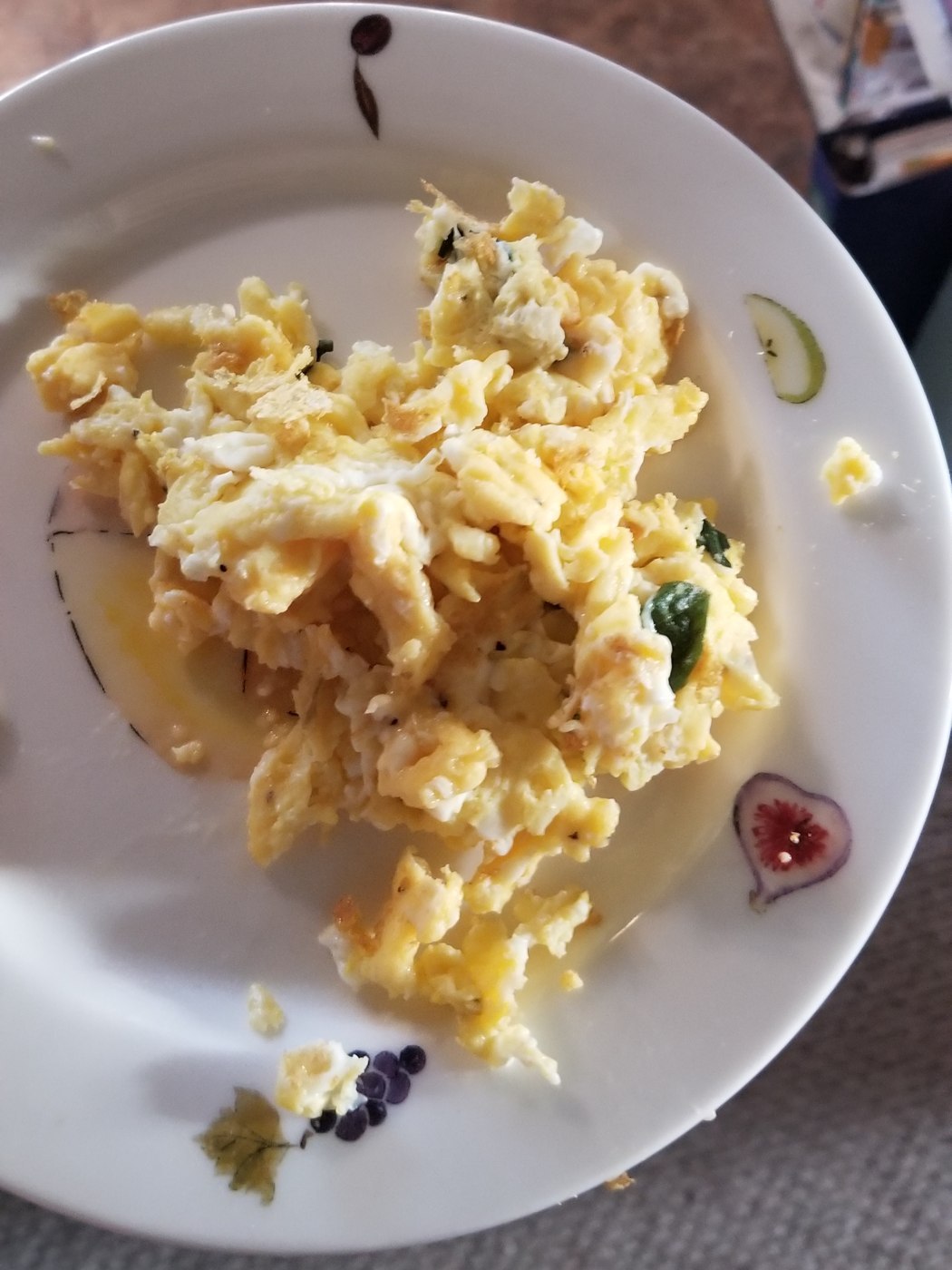
Scrambled eggs with fresh basil
Gently cooked eggs are finished with basil added at the end.
- Total time
- 15 min
- Servings / pieces
- 2
- Topic
- Everyday cooking
Scrambled eggs cook more evenly when the heat stays controlled. A gentle pan gives time to form substantial soft pieces instead of instantly producing dry crumbs. This version needs eggs, butter and a small splash of milk. Basil joins at the end so its leaves retain their fragrance. The quantities make two portions for breakfast with bread. Salt enters during whisking to distribute it evenly. Serve the eggs fully set, but do not leave them sitting on a hot switched-off hob after they are done. Moving them promptly to plates prevents unnecessary further cooking.
Method
Step by step
- 01
Beat eggs
Crack eggs into a bowl and beat with milk and salt. Combine yolks and whites without needing to whip the mixture into a foam.
- 02
Prepare basil
Wash and thoroughly dry basil. Pull leaves from stems and tear into small pieces. Keep aside until the end to avoid prolonged heating.
- 03
Melt butter
Melt butter over low to medium heat. It should foam gently without browning. Pour in the eggs and leave untouched for about 20 seconds.
- 04
Set the eggs
Slowly push from the edges towards the centre. Let liquid egg run into the cleared areas. Repeat for 3–4 minutes until no liquid white patches remain.
- 05
Fold in herbs
Briefly fold through basil and pepper. Transfer fully set eggs to warm plates. Cook a little longer if necessary, but remove from the hot pan promptly once done.
Times are a guide. Your hob, oven and ingredients affect the result; use the cooking cues as well as the clock.
Do not stir continuously
Short pauses between movements allow larger pieces to form. Constant rapid stirring produces small flakes. An excessively hot pan fixes the base while raw mixture remains above. Take it briefly off the heat if necessary and work with residual warmth.
Milk is optional
The small milk quantity loosens the mixture but is not essential. Replace it with 2 tbsp water or leave it out. Excessive milk lengthens cooking and can separate. Change herbs to taste: finely slice chives or chop parsley well. Basil can remain in larger tender fragments.
Kitchen questions
One more question?
Why does water separate?
Strong heat or prolonged cooking can squeeze out moisture. Cook more gently and remove the eggs from the pan as soon as they are fully set.
Can I add cheese?
Yes. Stir in about 20 g finely grated cheese just before finishing. Adjust salt cautiously afterwards because cheese adds its own seasoning.