German classics
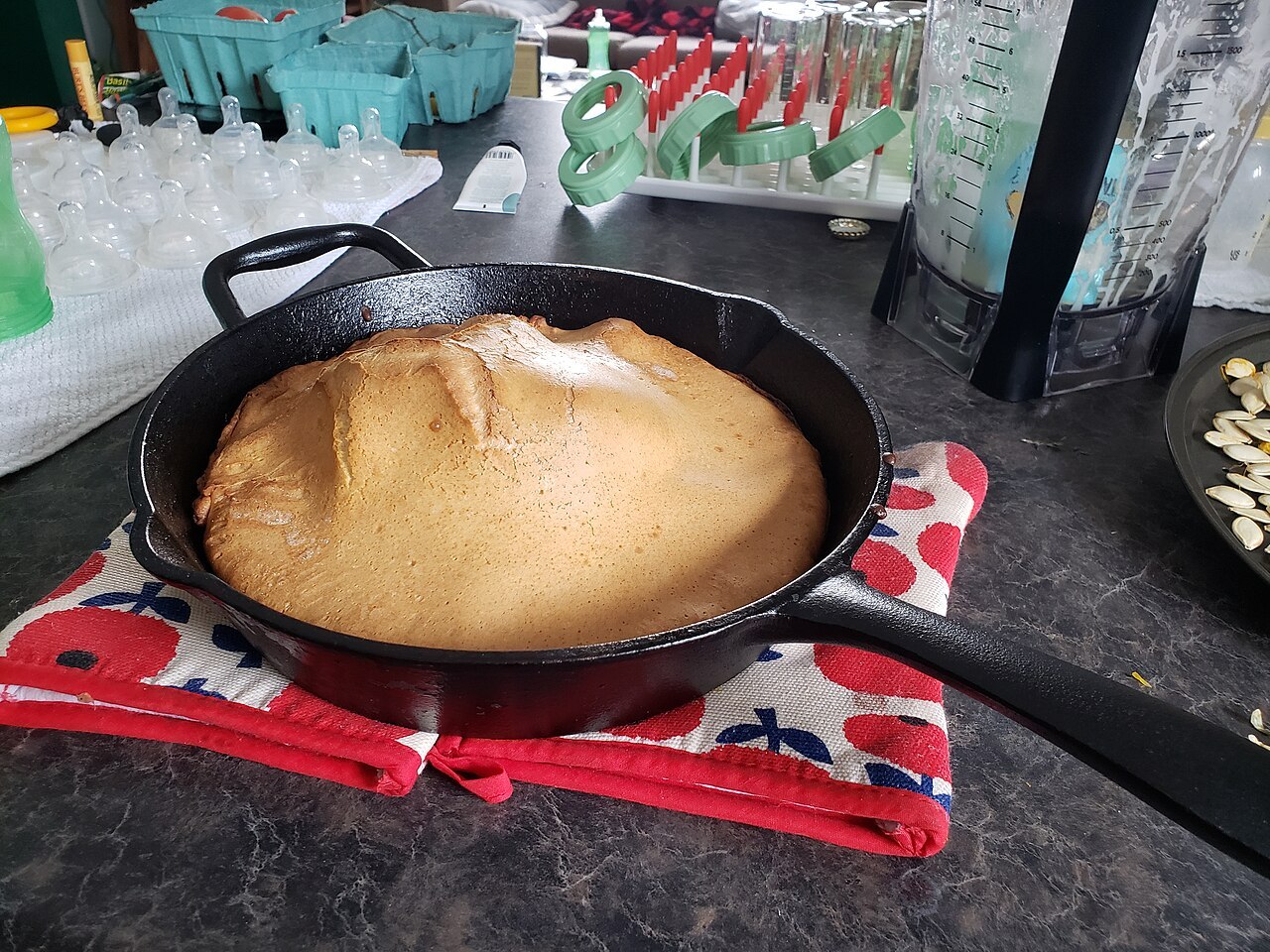
Dutch baby oven pancake
A thin egg-and-milk batter rises into tall golden edges in a hot cast-iron skillet.
- Total time
- 30 min
- Servings / pieces
- 2
- Topic
- German classics
This oven pancake is often called a Dutch baby. It contains no yeast or baking powder: steam lifts the thin batter inside a hot pan. The edges rise particularly high while the middle stays flatter and softer. It sinks a little after leaving the oven, which is part of the method rather than a fault. Start with a genuinely hot ovenproof skillet and a fully heated oven. The batter is lightly sweetened, ready for optional icing sugar and lemon juice at the table. These quantities suit a pan about 24 cm across.
Method
Step by step
- 01
Heat the skillet with the oven
Place the empty skillet on the middle shelf and heat the oven to 220 °C conventional heat. Let the pan heat with the oven. Check that its handle and any coating are suitable for that temperature.
- 02
Mix a thin batter
Whisk the eggs with the milk, sugar and salt. Add the flour and beat to a smooth, thin batter. Leave for a few minutes while the oven finishes heating.
- 03
Melt butter in the skillet
Using oven gloves, carefully remove the hot skillet. Add the butter and tilt to spread it over the base. It can foam but should not become dark. Give the batter one final brief stir.
- 04
Bake with the door closed
Immediately pour the batter into the skillet and return it to the oven. Bake for about 18–22 minutes. Keep the door closed for the first 15 minutes so the heat remains steady.
- 05
Serve hot and carefully
Remove when the edges are tall and deeply golden and the centre no longer looks liquid. Stand on a heatproof surface. Serve with optional icing sugar and lemon; remember that the skillet handle stays hot for a long time.
Times are a guide. Your hob, oven and ingredients affect the result; use the cooking cues as well as the clock.
Sinking is expected
Much of the height comes from steam. After baking, the air inside cools and steam escapes, so the middle settles. This does not mean the batter failed. For the most dramatic raised edge, take the pancake to the table directly from the oven and serve promptly.
Pay attention to pan size
A much larger skillet spreads this amount of batter more thinly and shortens cooking time. A smaller one gives a thicker centre that needs longer. Do not transfer to a cold dish if you want a high edge. The hot buttered pan is an important part of the method.
Kitchen questions
One more question?
Can I use an ordinary frying pan?
Only if the entire pan, including its handle, is explicitly ovenproof at 220 °C. Plastic handles and unsuitable coatings must not go into this hot oven.
Why did the edges stay low?
Often the pan or oven was not fully hot. An oversized dish or opening the oven door early can also reduce the rise.
.jpg)

