German classics
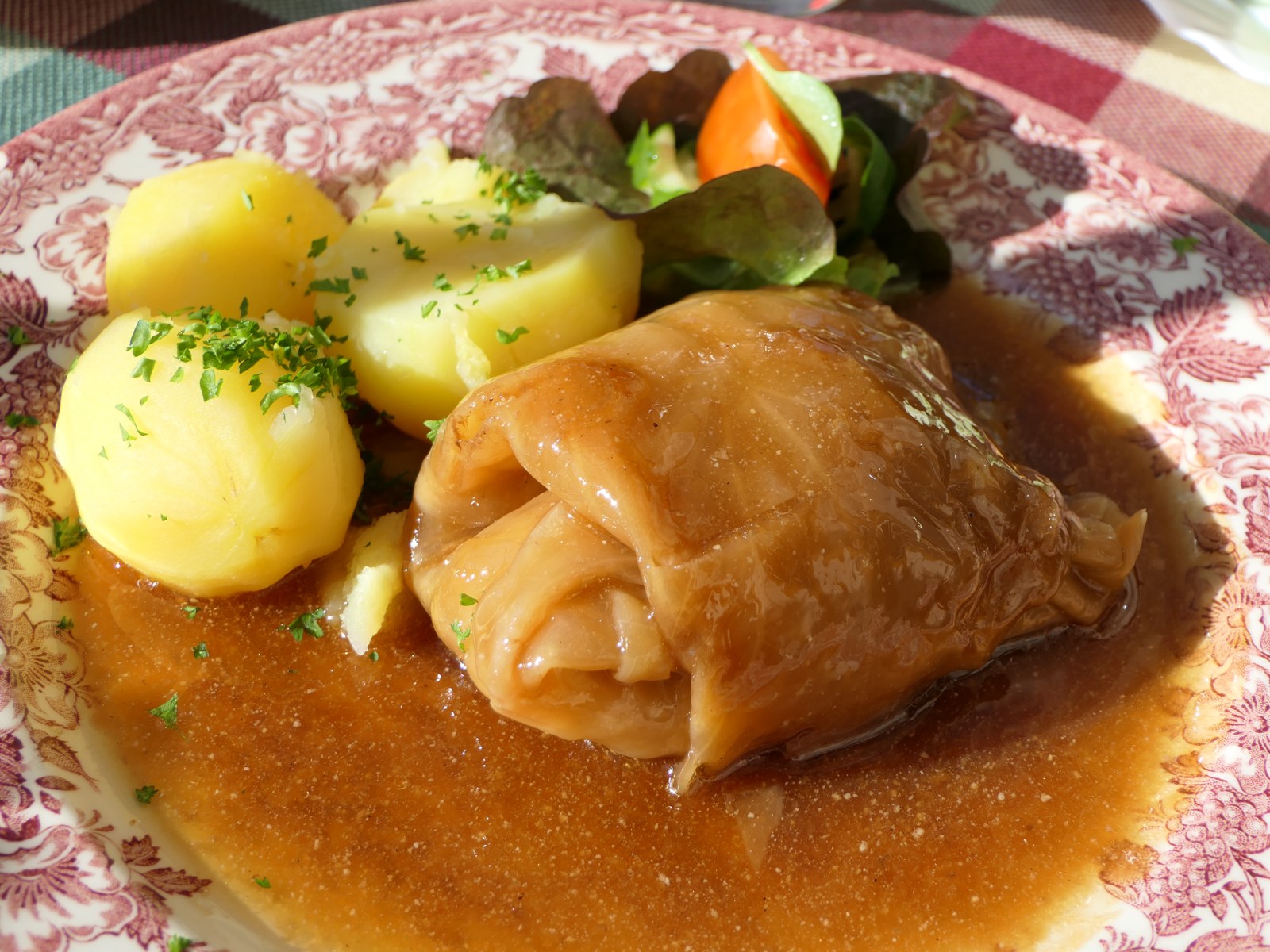
Cabbage rolls with a savoury meat filling
Large white cabbage leaves make a tender wrapper for seasoned minced meat.
- Total time
- 100 min
- Servings / pieces
- 4
- Topic
- German classics
Large white cabbage leaves make a tender wrapper for seasoned minced meat. Brief blanching makes the leaves flexible, and trimming the thick central rib helps them fold neatly. Brown the rolls in a little oil before braising them in a straightforward tomato stock. Keep the portions equal in size so they finish together. You will not need every leaf from the cabbage: slice and cook the remainder separately rather than wrapping each roll in unnecessarily thick layers. Boiled or mashed potatoes suit the finished sauce.
Method
Step by step
- 01
Separate the leaves
Cut a cone around the cabbage core. Lower the head into gently boiling salted water and gradually remove eight large outer leaves. Blanch each for three minutes, cool in cold water and dry thoroughly. Trim the thick ribs flatter with a knife.
- 02
Mix the filling
Finely dice the onion. Briefly mix with mince, egg, breadcrumbs, mustard, paprika, one level teaspoon of salt and some pepper. Rest for five minutes so the crumbs absorb moisture and the filling holds together more easily.
- 03
Wrap the rolls
Overlap two leaves for each roll. Place one quarter of the filling on top in an oblong shape. Fold in the sides and roll firmly. Secure with string, avoiding tension that cuts into the softened leaves.
- 04
Brown and braise
Heat oil in the casserole. Brown the rolls on all sides for about eight minutes altogether. Briefly fry tomato purée in a clear area of the pan, then add stock and optional caraway. Cover and braise gently for 45–55 minutes.
- 05
Finish the sauce
Turn carefully once. Check that the filling reaches 70 °C for at least two minutes. Lift out the rolls, simmer the sauce uncovered for five minutes and adjust seasoning. Remove the string before serving with potatoes.
Times are a guide. Your hob, oven and ingredients affect the result; use the cooking cues as well as the clock.
Preventing split leaves
Stiff leaves tear when folded. Return them to hot water for another minute. Cover small tears with a second leaf. Thin Savoy cabbage leaves generally need less blanching and produce a milder variation.
Judging the liquid
Cabbage releases extra moisture as it braises. Wait until the rolls are cooked before deciding how much the sauce needs reducing. Reducing too strongly at the beginning can make the pan catch and the rolls difficult to turn.
Kitchen questions
One more question?
Can I put rice in the filling?
Use 100 g cooked, cooled rice instead of breadcrumbs. Raw rice would require extra liquid and a different cooking time.
What should I do with leftover cabbage?
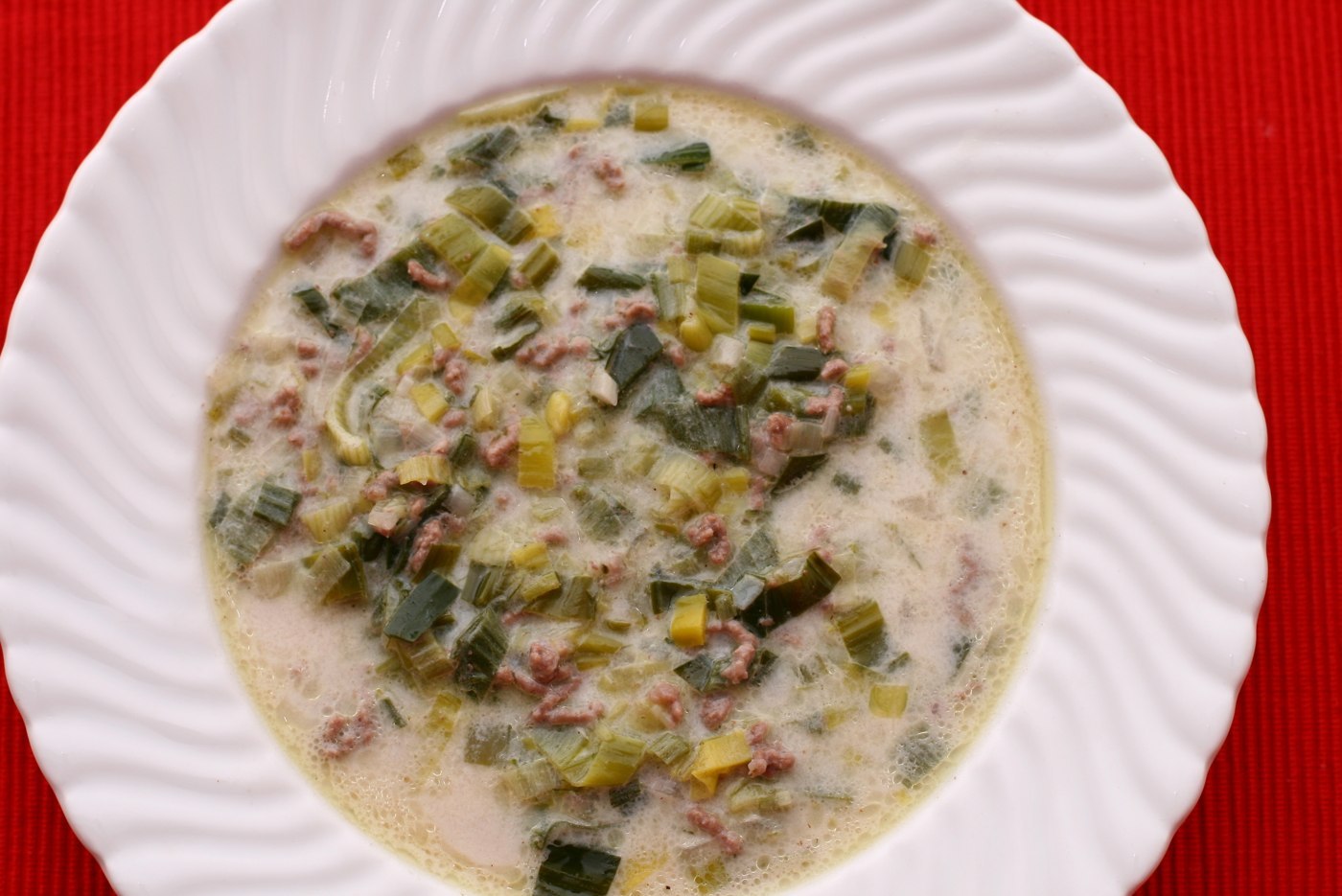
Slice it for a separate vegetable dish or cabbage soup. Blanch only the leaves needed to wrap the rolls.
.jpg)

