Everyday cooking
Simple frying-pan omelette
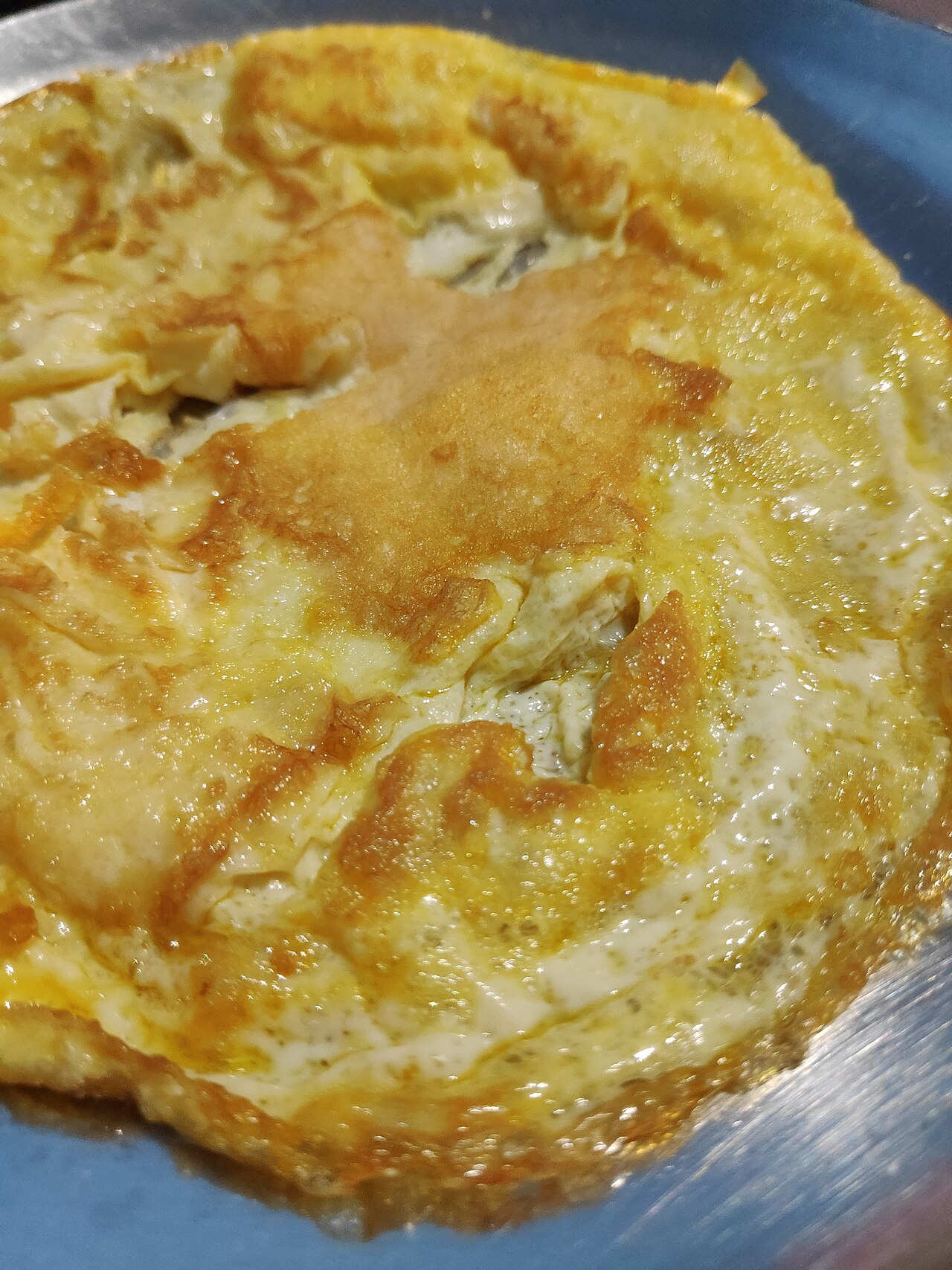
Two eggs cook in a little butter to make a thin, lightly browned omelette.
- Total time
- 15 min
- Servings / pieces
- 1
- Topic
- Everyday cooking
An omelette needs neither flour nor a large amount of milk. Eggs and a little butter create a thin continuous layer. A small non-stick pan makes handling easier: an oversized pan produces a very thin sheet that tears readily. This version can develop a little colour underneath and is served fully set. Folding is optional; an open omelette also works with bread or a small salad. The quantities make one serving. For several people, cook separate omelettes in succession rather than piling a large quantity of egg into one small pan and struggling to set its centre.
Method
Step by step
- 01
Mix eggs
Beat eggs with water and salt in a bowl. The mixture should be evenly yellow without much foam. Break up any large visible strands of white with the fork.
- 02
Warm the pan
Warm the pan over medium heat and melt the butter. Tilt gently to coat the entire base. The butter should foam without becoming dark brown.
- 03
Pour in eggs
Pour in the eggs and carefully tilt the pan for even coverage. Set for about 30 seconds, then gently push the cooked edges towards the centre.
- 04
Finish gently
Let liquid egg run into the cleared areas. Lower the heat slightly and cook for another 2–3 minutes. Cover briefly if necessary until the upper surface is fully set.
- 05
Serve omelette
Add pepper. Loosen the omelette at the edge and slide onto a plate, either open or folded in half. Serve immediately to prevent further drying.
Times are a guide. Your hob, oven and ingredients affect the result; use the cooking cues as well as the clock.
Match the pan to the eggs
Two eggs suit a pan with a base around 20 cm across. A much larger base makes a thin layer, while a much smaller one leaves a slow-cooking centre. For several servings, cook individual omelettes and measure fresh butter each time rather than stacking all the egg in one small pan.
Cook fillings separately
Mushrooms, onions or peppers should be precooked and fairly dry before filling an omelette. Raw watery vegetables can cause tears or uneven cooking. This basic version stays unfilled; add a restrained quantity of herbs or grated cheese near the end if wanted.
Kitchen questions
One more question?
Why does it stick?
A damaged non-stick coating or insufficient fat can be responsible. Warm the pan, spread butter evenly and avoid forcing the eggs away immediately.
Must I turn the omelette over?
No. Gentle heat and brief covering cook the upper surface without a complete flip, which is particularly useful for thin omelettes.