Everyday cooking
Pasta with basil pesto
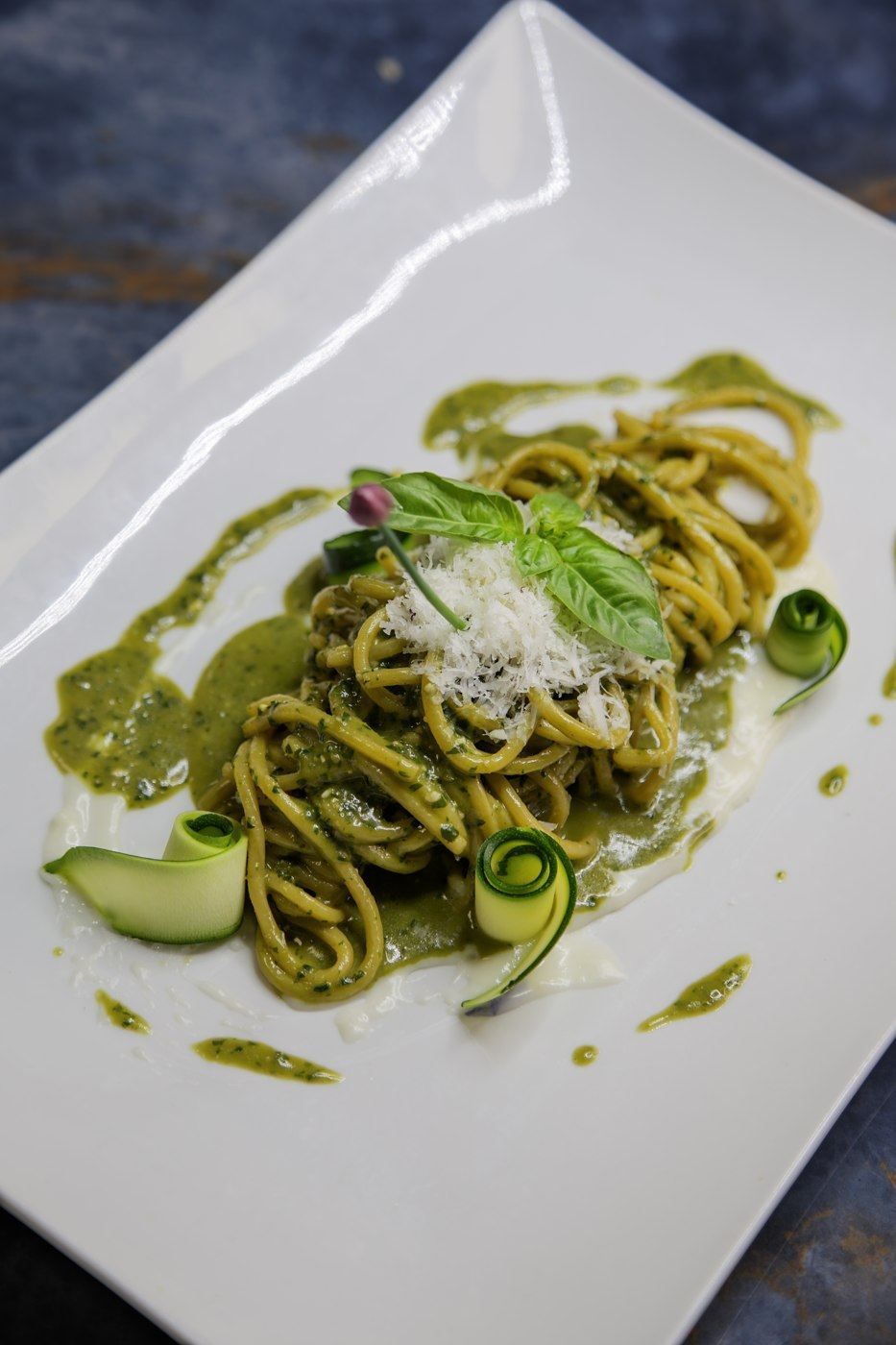
Fresh basil, pine nuts and hard cheese become an uncooked sauce for hot pasta.
- Total time
- 25 min
- Servings / pieces
- 4
- Topic
- Everyday cooking
Pesto joins the hot pasta without being fried or boiled. This helps preserve the fragrance and green colour of fresh basil. The small sauce uses a few ingredients whose balance can still be adjusted during mixing: oil gives richness, while pasta water makes the coating loose enough to spread. This version pairs spaghetti with basil pesto. Toast the pine nuts only lightly to avoid bitterness. A mortar produces a coarse texture, while a small blender is convenient for everyday cooking. Stir in the cheese after crushing the leaves rather than processing everything into a smooth paste.
Method
Step by step
- 01
Toast pine nuts
Toast the pine nuts in a dry frying pan over medium heat for 2–3 minutes until lightly golden. Keep moving them, then transfer to a plate to cool.
- 02
Crush basil
Wash and thoroughly dry the basil. Roughly chop the garlic. Crush or briefly pulse the basil, garlic and pine nuts with about half the oil.
- 03
Season pesto
Stir in the remaining oil and hard cheese with a spoon. The pesto should be spreadable and retain small leaf fragments. Add salt cautiously because the cheese is already salty.
- 04
Boil spaghetti
Cook the spaghetti in plenty of salted water until al dente, following the packet timing. Reserve 150 ml cooking water before draining. Put the pesto into a large, unheated bowl.
- 05
Combine in a bowl
Add the drained spaghetti and start with 60 ml cooking water. Toss firmly until the sauce coats the strands. Add more water if needed, adjust the seasoning and serve immediately.
Times are a guide. Your hob, oven and ingredients affect the result; use the cooking cues as well as the clock.
Keep the basil cool
Long blending heats the leaves and makes an unnecessarily smooth paste. Short pulses and well-dried leaves help maintain a fragrant green sauce. Include stems only if they are young and tender; thicker stems can remain fibrous in this uncooked preparation.
Changing the nuts
Blanched almonds or walnuts can replace pine nuts, though they give different flavours. Toast them lightly and let them cool as well. Cheese made with animal rennet makes the dish unsuitable for vegetarians; choose a labelled vegetarian hard cheese when necessary. Lemon juice is an optional flavour adjustment.
Kitchen questions
One more question?
Why does the pesto seem dry?
Pasta absorbs moisture. Work in a little warm cooking water and toss again before adding extra oil. Water helps distribute the sauce more evenly.
Should I heat the pesto?
The heat of the noodles is enough here. Boiling changes the fresh basil flavour and is unnecessary for bringing the coating together.